Types of Cowboy Boots: A Complete Style Guide

The cowboy boot is traditional and iconic—and for good reason! The cowboy boot as we know it today was inspired by Spanish vaquero-style footwear back in the 1600s. Cowboy boots, also known as western boots, have since evolved to include many different styles, shapes, and materials. They can be both functional and beautiful, whether you're wearing them for riding or out on the town.
Our staff at Riding Warehouse has been helping our customers find their perfect boots for over a decade. This guide was created as the ultimate informational and style resource, so you can find your perfect look and fit. Below, we'll cover everything you need to know about the parts of the boot, different styles, materials, sizing, and even our top picks so you can find your perfect match.
Cowboy Boot Top Picks
From a trusty pair for riding to some good-looking boots for going out on the town, picking the perfect pair for you can be daunting. Check out our top picks when it comes to the best cowboy boots in the handy chart below!
| Cowboy Boot | Men's or Women's | Best For |
| Ariat Round Up Narrow Cutter Toe | Women's | Riding |
| HYER Chase WesTrail Collection | Men's | Riding |
| HYER Lola WesTrail Collection | Women's | Daily Wear |
| Ariat Hybrid Rancher | Men's | Daily Wear |
| HYER Willowbrook WesTrail | Women's | Dress |
| HYER Hays Legends Collection | Men's | Dress |
Best Riding Cowboy Boots

Ariat Round Up Narrow Cutter Toe Cowboy Boots
When we think of a boot that's going to keep hardworking gals comfortable in the saddle all day long, the Round Up boots from Ariat come to mind quickly! With ATS® technology creating ergonomic support and a Duratread sole offering shock absorption, you can say goodbye to soreness in the stirrups!
| Why You'll Love Them | Potential Drawbacks |
Crafted from High-Quality Leather Robust Duratread Sole ATS® Technology
| Heavier Leather Construction May Extend Break-In Period Only Offered in One Width |
Fit Note...
We have found that the Round Ups run true-to-size, but the toe box may be too low for people with high arches.

HYER Chase WesTrail Collection Cowboy Boots
What's better than boots that feel just right from the first time you pull them on? As part of the WesTrail collection, these boots are a lighter-weight option, perfect for the saddle. The 10-iron leather outsole and stabilizing shank keep these boots unquestionably sturdy, while a goat leather shaft provides a soft “broken-in” feel we all love.
| Why You'll Love Them | Potential Drawbacks |
Soft Goat Leather Shaft Vintage Stitching 10-Iron Leather Outsole Easy Nylon Pull Straps | Shaft May Be Less Durable than Traditional Cowhide Only Offered in Standard Width |
Fit Note...
We have found that the Chase runs true-to-size.
Best Daily Cowboy Boots

HYER Lola WesTrail Collection Cowboy Boots
Run barrels, sit by the fire, and work around the farm in one boot. It's a cowgirl's dream! The Lolas are crafted from strong cowhide and goat leather that is built to last and perfectly conforms to your needs. The lightweight construction keeps them comfortable and makes mobility easy all day long.
| Why You'll Love Them | Potential Drawbacks |
Reinforced Pull Holes Goat and Cowhide Leather GoodYear Welt Construction Offered in Both Regular and Wide Widths | Goat Leather Shaft is Less Durable Natural Leather Variations May Change the Shaft Color |
Fit Note...
We have found that the Lolas run true to size.

Ariat Hybrid Rancher Cowboy Boots
Some days require a boot that is built for the man who never slows down. The Ariat Rancher Cowboy boots will keep up all day long with their dependable traction, lasting durability, and exceptional comfort. The grippy rubber outsole and heel keep you stable on every surface, while lightweight support makes the long days feel easier.
| Why You'll Love Them | Potential Drawbacks |
Crafted from Durable Cowhide Leather Aggressive Rubber Tread GoodYear Welt Construction Lightweight, Breathable Mesh Lining | Only Offered in Standard Width Heavier-Duty Cowhide Leather Takes Longer to Break In |
Fit Note...
We have found the Hyrbid Ranchers to run true-to-size, but some prefer to go up 1/2 of a size for added comfort.
Best Dress Cowboy Boots
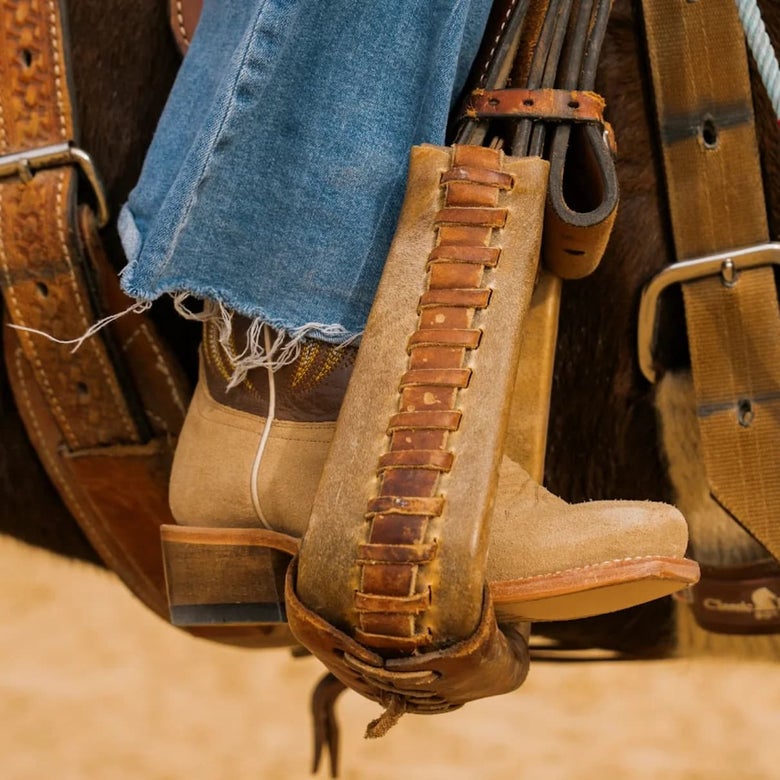
HYER Willowbrook WesTrail Collection Cowboy Boots
You'll hit the town looking your best in the HYER Willowbrook boots. The cute two-toned construction with a chocolate vamp makes a standout look everywhere you go. Looking for subtle? Pair it with your best jeans to show off the light sand suede leather vamp. A full leather lining and lightweight insole keep you comfortable, while a 10 Iron leather outsole and stabilising shank keep you balanced.
| Why You'll Love Them | Potential Drawbacks |
Cute Two-Toned Construction Lightweight, Supportive, and Flexible Insole Durable GoodYear Welt
| Heavier-Duty Cowhide Leather Takes Longer to Break In Suede Vamp Requires Additional Care |
Fit Note...
We have found that the Willowbrook is true-to-size.

HYER Hays Legends Collection Cowboy Boots
Legendary is the best way to describe the HYER Hays boots. Built on the backbone of tradition, they offer a classic look and feel with all of the modern features you need. A vintage rust goat top complements the classic "Lawless" Hyer stitch pattern. The dual-density orthopedic inserts will keep you comfortable for long nights on your feet!
| Why You'll Love Them | Potential Drawbacks |
"Lawless" Historic HYER Stitch Pattern Dual-Density Orthopedic Insert Premium Leather Lining and Leather Outsole for a Custom Fit | Goat Leather Shaft is Less Durable Leather Sole Lacks the Traction of a Rubber Sole |
Fit Note...
We have found that the Hays run true-to-size.
Parts of the Cowboy Boot
As you embark on your search for the right pair of boots, understanding some common terminology can help you figure out what to look for. Depending on what you're using them for, you'll want to make sure your boots have certain parts or features. Although cowboy boots can vary in design and construction, some pieces stay consistent in every boot.
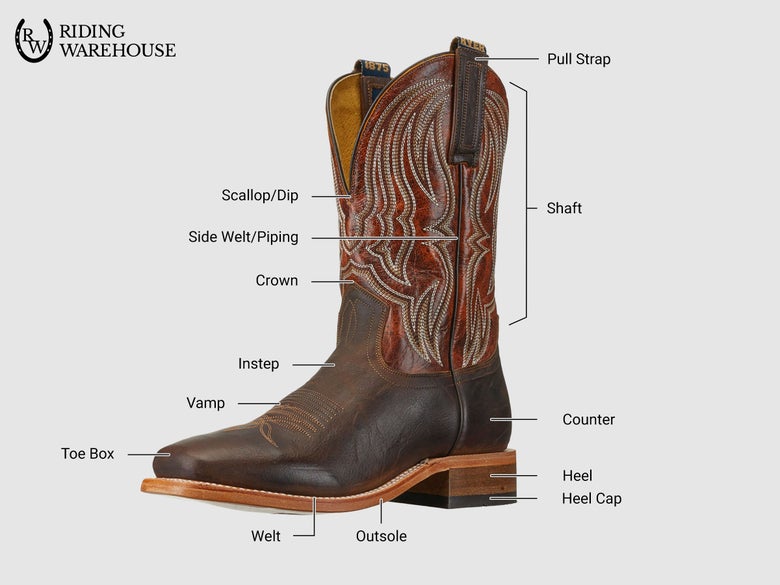
- Pull/Tug Straps: These are straps at the top of the boot on either side, which allow you to slip your fingers around them and "pull" your foot into the boot.
- Shaft: The shaft of the boot is the long tube that starts at the heel and goes up to wrap around the leg. Shafts can differ greatly in height, width, style, and design.
- Heel: The heel is essential when it comes to cowboy boots. For riding boots, the heel prevents your feet from sliding through the stirrups, thus keeping you safe. Different heel angles, heights, and materials will affect your overall boot fit and level of grip.
- Heel Cap: A protective layer that reduces wear and tear to the heel.
- Tongue/Instep: The tongue, or instep, is the top piece on the outside and inside where the leather meets the boot shaft. If the instep is too tight and narrow, it can cause discomfort; on the other hand, an instep that is too loose will cause your feet to slide around.
- Vamp: The vamp is the most visible part of the boot, commonly decorated with intricate stitching. It covers the top of your foot and should be comfortably snug. If you have a particularly high instep, the vamp will likely feel tight.
- Welt: The welt is the construction in which the sole is attached. Different welt types determine how strong, durable, and supportive the boots are. The welt also affects how easy or difficult the boots are to resole. The most common is the Goodyear welt, as it tends to be more water-resistant and last longer than other types.
- Outsole: The very bottom of the cowboy boot. The part that touches the floor. It can be made of different materials and have different traction.
- Toe Box: The area that encases the toes at the front of the boot.
Cowboy Boot Guide: Types, Styles, Fit, And More
Cowboy Boot Styles

| Style | What They Are Best For |
| Traditional Boots | Typically preferred for riding or casual work. |
| Roper Boots | Made for roping cattle, with improved comfort for walking. |
| Work boots | Used for manual labor or other work around the farm; can have steel toes. |
| Short Boots | These are made for fashionable wear, away from the saddle. |
| Exotic Boots | Made for formal or dress wear, typically worn as a statement piece. |
| Dress Boots | Typically worn at special events, like weddings or nice dates. |
Traditional Boots:
The traditional boot was designed for the stirrup. This style of boot is built for durability and function while on the horse. It's constructed with a tall shaft that stops about calf height to keep your calves protected in the saddle. A narrow toe and heel block keep your feet in place in the stirrups.
Roper Boots:
Roper boots are similar to traditional cowboy boots but specifically designed for roping cattle. The shaft and heel are both shorter to make them more comfortable to wear and walk in. These boots are the perfect combination of Western style and practicality.
Work Boots:
Work boots are designed for durability and hard wear. These boots are built to protect your feet while working out in the field and on the farm. Work boots normally feature a thick rubber sole to provide grip, and a wider round toe that can be reinforced with steel to give excellent protection (in certain circumstances). Steel toe is typically used in construction and similar fields; however, steel toe is not recommended to wear around horses or cattle.
Short Boots:
For the country fashionista, short boots, otherwise known as booties, are a must-have. These kinds of boots feature a small shaft that stops at about ankle height. They're typically worn as a fashion statement more than as a riding boot. These boots are the perfect way to bring some western style into your wardrobe!
Exotic Boots:
With all the different styles of cowboy boots, some can be more uniquely crafted to help show off your individual style. Exotic boots are made from exotic materials, including, but not limited to, ostrich, alligator, snakeskin, and bison.
Dress Boots:
Crafted from high-quality materials with detailed stitching or embroidery, dress boots provide a more professional feel for nicer events like weddings. Unlike many of the more practical and rugged styles on this list, dress boots provide you with a clean and crisp look. Rarely used for riding, dress boots are usually saved for those special events and functions away from the barn.
Cowboy Boot Toe Shapes


Square Toe:
Square-toe boots offer the most space with their wide width, making them quite comfortable for every kind of activity. This shape is cut straight across like a square, as the name suggests. This style of toe is commonly seen in riding boots.
Round Toe:
Round-toe boots are rounded all the way around and do not come to a point. Being more popular in casual scenarios, round-toe boots allow more wiggle room for your feet.
Traditional Toe:
The most commonly known and worn option is the traditional, or regular, toe. This toe is oval and comes to a slightly narrow point. If you are a first-time boot buyer, the traditional toe is a great choice!
Snip Toe:
Snip toes are found in fashion and dress boots; they are much narrower in shape than the other styles on this list. The snip toe squares off slightly at the end of the point. These have a more formal look and make the leg look longer and more elegant. Snip toes are commonly interchanged with the term "pointy toes."
Common Boot Materials

Full-Grain Leather:
Most cowboy boots are crafted from full-grain leather, meaning the leather has not been altered or changed from its natural state. All scuffs and imperfections are left as is, making each boot unique.
Top-Grain Leather:
A popular material used for cowboy boots, top-grain leather is still considered a premium option. Top-grain leather is easier to access, and any imperfections can be remedied instead of having to be cut out.
Synthetic Materials:
Synthetic materials can be found in combination with leather or on their own to provide additional benefits for all-day wear, such as mesh paneling in the boot shaft for added ventilation. Synthetic boots can be easier to care for, as they do not require as much maintenance as leather. They also hold up longer against cracking from water exposure.
Outsole & Heel Materials

Leather Outsole & Heel:
Traditional cowboy boot outsoles are made with heavy-duty leather, providing a comfortable feel that breathes and helps absorb sweat. While riding, leather soles have the advantage of allowing you to easily slip your boots in and out of the stirrups if needed (especially in the case of an emergency). With a slick feel, the traction on leather sole boots is minimal, making this outsole perfect for dancing purposes! Leather-sole boots will need to be resoled over time by a specialized cobbler, typically after two to three years of regular use. Most boot heels are made of compressed leather.

Rubber Outsole & Heel:
The invention of the rubber outsole, normally found on roper-style boots, has allowed for improved durability for cowboy boots. Rubber is a newer outsole material that has been around for only the past few decades. It is both flexible and stable, making it more commonly sought after for work boot purposes. These are built to tackle wet or slippery conditions, whether you're on concrete or in the dirt. With strong anti-slip properties, rubber outsoles and heels provide traction with each step at a more budget-friendly cost. Some rubber soles on boots are also oil-resistant or electrical hazard rated.

Hybrid Outsole & Heel:
Hybrid cowboy boots consist of a leather outsole and rubber heel, which allows for easy movement while providing some grip. This material combination is great for riding and for wearing around town, giving you the best of both worlds for the arena or the dance floor. Truly handcrafted western cowboy boots feature hand-rolled and hand-pegged outsoles.
How to Fit Your Cowboy Boots
The fit of your cowboy boot is the most important piece of your boot selection process. There is nothing worse than riding all day in a pair of boots that are uncomfortable or hurt. Follow our helpful guidelines below to find the right fit:
- If the manufacturer provides a specified sizing chart, measure the length of both feet from heel to toe and compare. Consider the socks you would be wearing with your boots.
- Choose your typical size, unless otherwise suggested. Some manufacturers can size their boots small or large. Your boots should be snug but not so tight that they cause discomfort.
- Move your toes to ensure they have room and are comfortable.
- Pinch the leather directly above the instep—there should be some room to pinch if the boots fit. If there is no leather to pinch, the boot may be too small, and the next half or full size up might work better.
- With each step, there should be a slight heel slip. A quarter to half an inch of heel space is normal.
Cowboy Boot Fitting Factors
Socks: Always wear the socks you are expecting to wear with your boots, preferably boot socks. Thicker socks can add at least an additional half size to your feet. If you are in between sizes, order the larger of the two.
Narrow or Wide Feet: Purchase your normal foot size in a medium width and add an insole (if needed) if you have narrow feet, to avoid cramming your toes in a boot that's too small. If you have wide feet, either go with a boot that's designated "wide" by the manufacturer or try a half size larger than normal. If you have one foot that's slightly bigger than the other, choose the boot size that fits your larger foot.
Instep: Try a wide width boot if you have a high instep; this may make the vamp fit more comfortably on the top of your foot. If you have particularly flat feet and the vamp feels loose, go down to a narrower boot width.
For more assistance in finding the right fit, watch our helpful video on how to size and fit cowboy boots below:
Cowboy Boot Care
Western cowboy boots come in a variety of materials, with the majority being leather. Always follow the manufacturer's care instructions, or at least research the proper care techniques for your boots before using any treatment products. As a general rule of thumb for leather cowboy boots, clean and condition them every three to six months of normal wear. Leather conditioners will not alter the color of your boots, even though they may appear darker when first applied. Leather oils, however, will darken your boot leather. A pair of boots can last for years with proper care! Please note, suede or roughout cowboy boots should only be cleaned with products intended for suede boots; water will damage this type of leather.
How to clean your leather boots, step by step.
- Brush Off Dust: Using a soft horsehair brush or a dry towel, wipe away dirt and dust. Pay extra attention to lines and creases that may be hiding dirt.
- Clean With Soap: Grab a recommended leather cleaner, typically a glycerine-based soap, and a damp sponge (or towel). Wipe away any dirt or build-up and remove leftover soap, being careful to not soak the leather. You can wipe excess water away with a dry towel.
- Air Dry: Let the boots dry at room temperature; do not apply heat, as this can damage and/or shrink your leather.
- Condition: Apply a dime-sized amount of leather conditioner with a clean towel or sponge with small circular motions. Ensure the entire boot is lightly coated, but do not saturate the leather.
- Polish or Buff: This is an optional step, typically only used for nicer dress boots. You are able to apply a matching polish to the toe box and heel for some extra shine. Once the polish is applied, buff the entire boot with a horsehair brush.
- Leather Protectant: Adding a leather protectant can make your boot stain- and water-resistant. Helping your boots last longer!




How to Style Your Cowboy Boots
A great pair of boots is essential at the ranch, but a cowboy boot doesn't have to be just for hard work. With the right styling, your boots can go from saddle to street. Swap your dusty jeans for a cute skirt or denim shorts, and let us show you how to take your cowboy boots from barn to town in style!


Skirts & Dresses: Flirty meets fashionable when you pair dress boots with a fun midi skirt or flowy boho dress. Cinch your waist with a statement western belt, and top it off with a lifestyle hat to style from head to toe.
Boot Pairing:
A slim, taller, snip toe dress boot with a dress heel to elongate the leg.
Trouser & Flare Jeans: Evening cowgirl goes downtown. Grab your favorite dark wash trousers or flare jeans to instantly dress things up. A silky wild rag for a pop of personality and a felt hat to finish off the look and pull it all together.
Boot Pairing:
Choose a cowboy boot that has detailed stitching right at the toe to give a little elegant flair for your night out.
Denim Shorts: Caffeine and cowgirl vibes. Keep it laid-back with denim shorts and a fitted tank, tie a flannel around the waist for some attitude and style. A sporty ball cap brings the look together, perfect for coffee runs, backyard BBQs, or two-stepping.
Boot Pairing:
Choose a mid-height boot with fun shaft details and a square toe.
Cuffed Jeans: Short boots deserve their moment, too! Roll up those jeans and let your bootie details shine.
Boot Pairing:
Keep it cozy and casual with a round toe and a comfy hoodie. Or dress up the look with a snip-toe bootie and some skinny jeans paired with your favorite blouse.
Frequently Asked Questions
How should my cowboy boots feel?
Your feet should feel snug in your boots, with the balls of your feet sitting securely in the widest part of the boot. Your heels should initially slip a little in properly fitted boots, as the leather will soften and conform to your heels over time to help eliminate heel slippage. The extra heel space in new boots is necessary for the best fit. Your toes should be able to wiggle around in the toe box easily without any pain or discomfort.
What type of boot should I wear for horseback riding?
Boot type and heel height largely come down to personal preference. However, there are a few considerations to keep in mind when selecting a pair of cowboy boots to ride in. Boots with the traditional narrow toe and higher heel height of around 2" are the best for riding, as they keep your feet more squarely planted in the stirrups. Boots with a middle heel height of around 1 1/2" are the most favored, as these cowboy boots offer the most versatility for walking, working, and horseback riding. Round toes and lower heel heights around 1" are commonly found in roper boots, as they are more comfortable for walking or working in; riders participating in events like calf roping tend to wear roper boots as they need to be able to easily get off their horse and run after roping the calf.
Do I need to treat or condition my boots upon first wear to break them in?
The safest way to break in your new cowboy boots is to simply wear them around the house at first. You can even double up on two pairs of socks to more quickly stretch the leather to conform to your feet. If your new boots are still taking a while to break in or are particularly uncomfortable, leather conditioner can be used to loosen the leather, making it softer and more pliable.
Closing Thoughts

The perfect pair of cowboy boots will elevate your look so you can feel your best and also help you perform your best in the saddle. Whether you're shopping for a pair to take into the arena or to hit the pavement, we're confident that there's a cowboy boot to take you there. With boots for a variety of styles, tastes, and purposes, our selection has something for everyone. We hope this guide has aided in your search for the perfect boot! If you have further questions, please reach out to our customer service team for additional guidance at info@ridingwarehouse.com or 1-800-620-9145. Check out our great selection of cowboy boots below: