Equine Supplements & Nutrition
Types of Horse Feeders
Finding the best feeding regimen for your horse can be a challenge. Just like humans, different horses can require different things to thrive; this can be even more difficult if you board your horses. Not every barn owner or manager is open to unique feeding regimens, which can include dietary restrictions, preferences for particular feeds, or specifically timed feedings.
If you're a horse owner or lessee, then you have probably heard about slow feeders at some point in your equestrian journey. Although there are no formal studies on the success of slow feeders, most equestrians are in agreement that they offer more benefit than harm. Slow feeders are designed to mimic a horse's natural habits of eating consistently, instead of limiting them to two or three "meals" throughout the day. One of the many benefits of a feeding regimen that feels more natural to your horse is reduced anxiety.
However, before you introduce a slow feeder, ask yourself: Does my horse even need a slow feeder? Which slow feeder would be best for my horse? Does a slow feeder make sense with my barn, paddock, or pasture setup? If you do choose to get a slow feeder for your horse, there can be safety concerns and doubts about how to use it correctly. We will be addressing these points and reviewing some favorites from the knowledgeable RW Crew in this article!
First off, there are important factors to keep in mind when choosing a slow feeder; it is not a one-size-fits-all solution! Material, hole size, hay type, and horse age all influence your equine's comfort or irritability during their hay consumption. If your horse is destroying your slow feeder or eating too quickly (continuing weight issues), it is time to reexamine your slow feeder and hay combination. Please refer to the handy chart below for a general guideline:
| Hole Size | Hay Type | Horse Age/Size |
| 0.5" - 1" | Grass, Chopped, Medium to Coarse Hay | Minis, Ponies, Donkeys, Mules, & Indulgent Horses |
| 1.5" | Longer Grass, Chopped, Alfalfa, Bermuda, Fine Hay | Young & Most Horses (Used to Hay Nets/Bags) |
| 1.75" - 2" | Grass, Timothy, Alfalfa, Forage, Thick to Coarse Hay | Anxious & Older Horses, Drafts, Warmbloods |
| 3" - 4" | Long-Stemmed, Straw, All Hays | Special Needs/Senior Horses/Cattle |
Finding the right feeder and hay combo may require some trial and error. Horses have different learning speeds, personalities, and patience when it comes to slow feeding. Be prepared to invest time, money, and effort into helping your horse accept the concept, especially if you are introducing the concept for the first time.
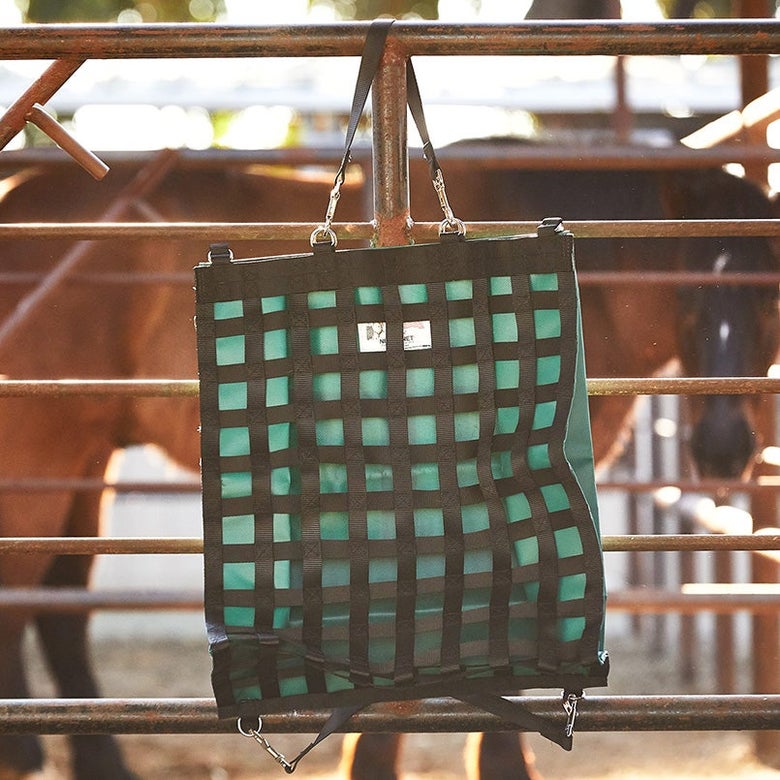
NibbleNet Slow Feeder
This feeder was designed to simulate grazing, with a one-bite-at-a-time concept for a more natural method of feeding. Made in the USA from heavy-duty vinyl and poly webbing, this slow feeder holds up against even the toughest of horses. With different hole sizes to choose from, you can customize your NibbleNet to your specific horse and hay needs. Stainless steel hardware and nylon straps ensure security and durability for daily feeding.
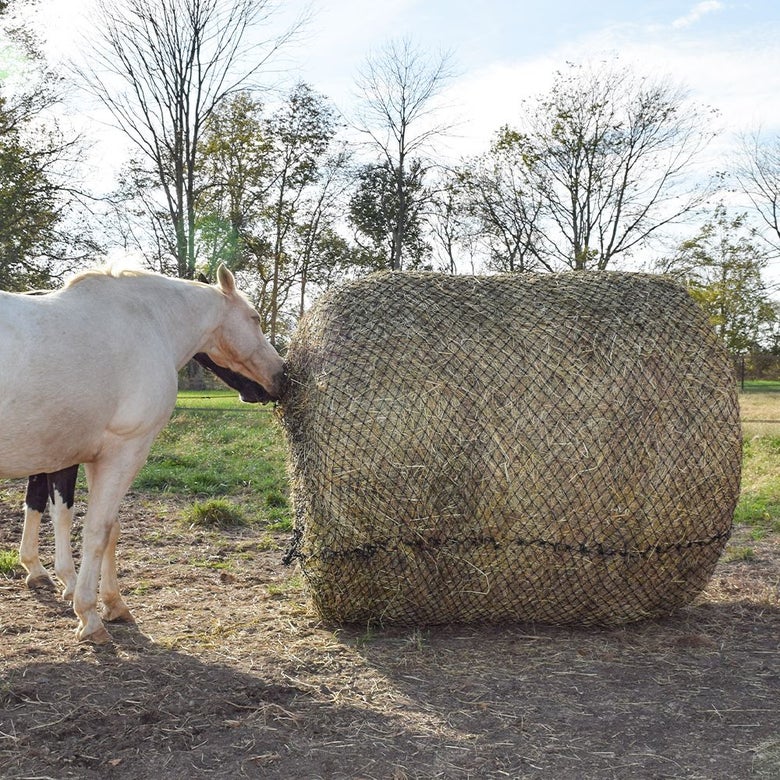
Tough1 Round Bale Hay Net
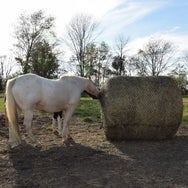
The Round Bale Hay Net from Tough1 is specifically constructed to net an entire round bale of hay for horses in the pasture. It is made from a tough poly cord that won't stretch over time, helping to prevent hay waste. Ideal for feeding a larger group of horses, this hay net also comes with a repair kit for fixing possible rips and tears. You can feel secure knowing that speedy eaters will be effectively slowed down by the 1.5" or 2.5" hole openings.
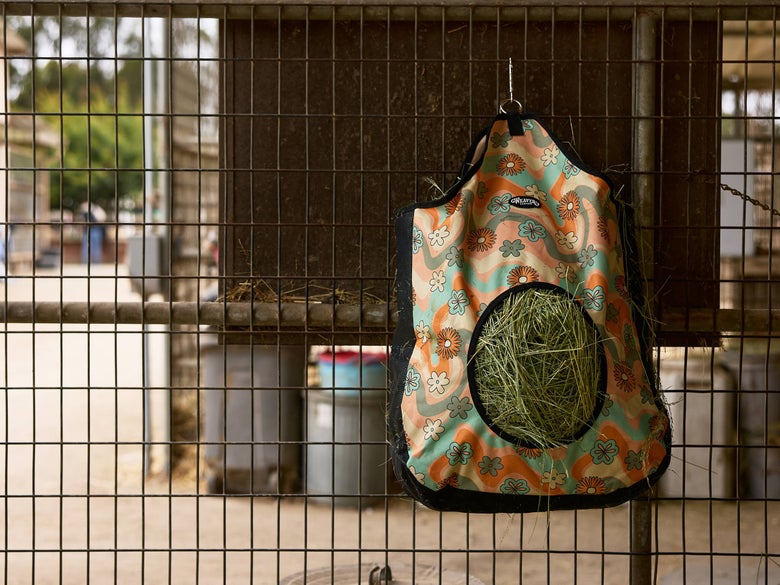
Weaver Breathable Easy Fill Hay Bag
While this hay bag from Weaver is not technically a "slow feeder" per se, we cannot ignore its accessibility! With a simple, wide top opening and fun patterns, loading and securing your hay in style is a breeze. Constructed from durable Cordura nylon, this bag is durable enough for destructive horses. The large front hole opening is good for horses easily frustrated by the small openings of slow feeders. Mesh panels on each side and back of the net ensure proper airflow. Ease your horse's mental well-being with this handy option for your barn or trailer.
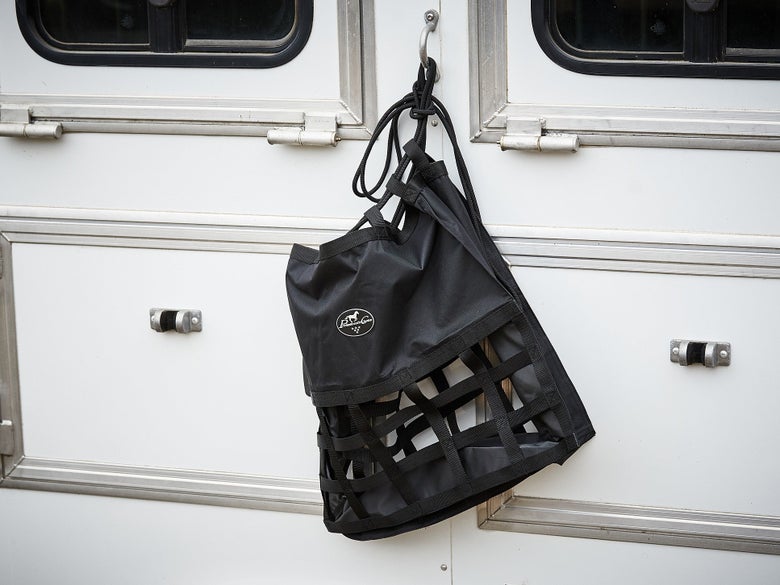
Professional's Choice Scratch-Free Hay Bag
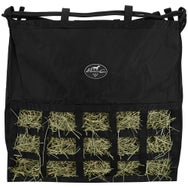
This scratch-free hay bag is ideal for trailering, showing, or camping. This hay bag does not have any metal hardware, preventing the possibility of scratches on your trailer. This option is great for overnight camping when your horse is tied to your trailer, since the absence of hardware will lessen the sound from noisy eaters. The top drawstring closure provides access for top loading and adjusting your hay bag's height. Reinforced nylon webbing and the 3" x 2" openings make this bag by Professional's Choice perfect for traveling.
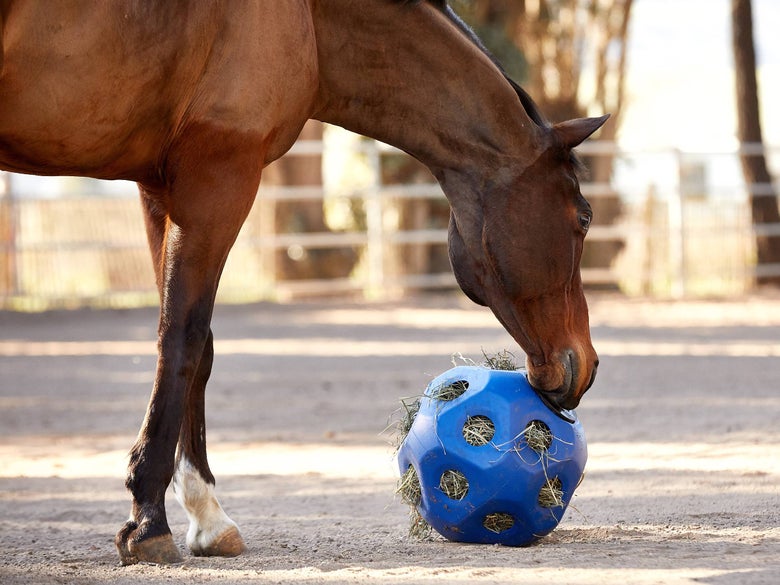
Equi-Essential Hay Ball
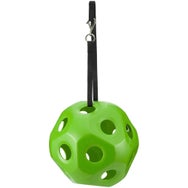
The Equi-Essential Hay Ball is the go-to slow feeder to beat boredom. The unique shape entertains your horse by allowing them to play and push the hay ball around without letting it roll too far away. It can also be hung on the stall like a standard hay bag if preferred. This hard plastic hay ball is 16" in diameter and weighs about 4.5 lb when not filled with hay. It has a 4.75" screw opening to fill and twelve 2.75" openings for your horse to eat from. The hay ball can hold up to 7 lb of hay and is ideal for one horse—especially a playful one!
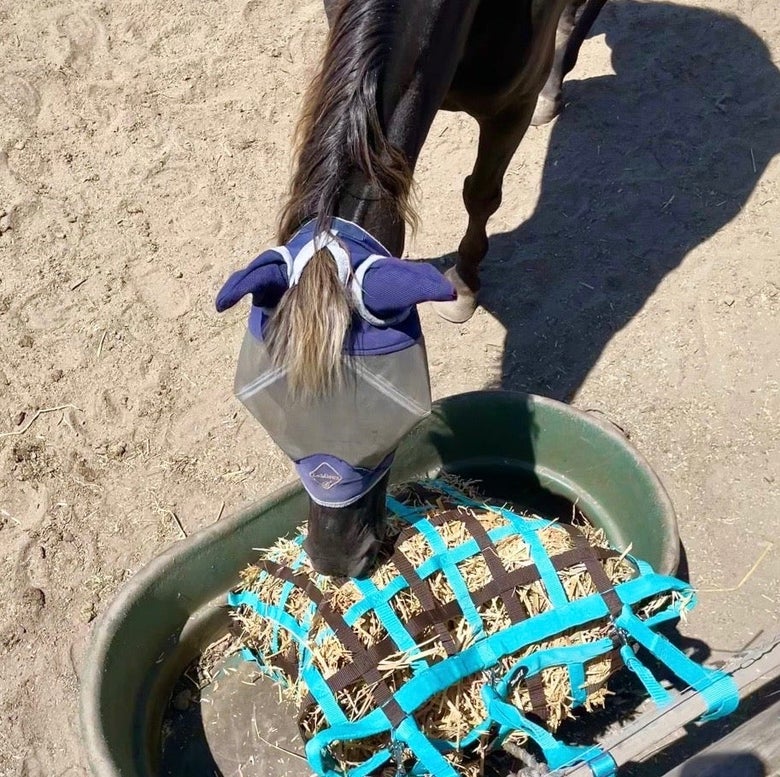
Tough1 Slow Feed Web Hay Net
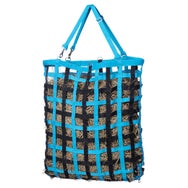
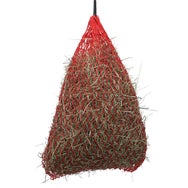
This slow feed hay net is a fantastic choice, no matter whether your horse is turned out, in a stall, or on the go. Constructed from 1" webbing, this net features small 2" by 2" openings that will help quick eaters slow their pace down. The plastic frame-in webbing makes loading the net with hay a breeze, and added straps on the lower back enable the net to be securely attached wherever you choose to feed your horse. From home to wherever your travels take you, this hay net is sure to satisfy your horse's slow feeding needs!
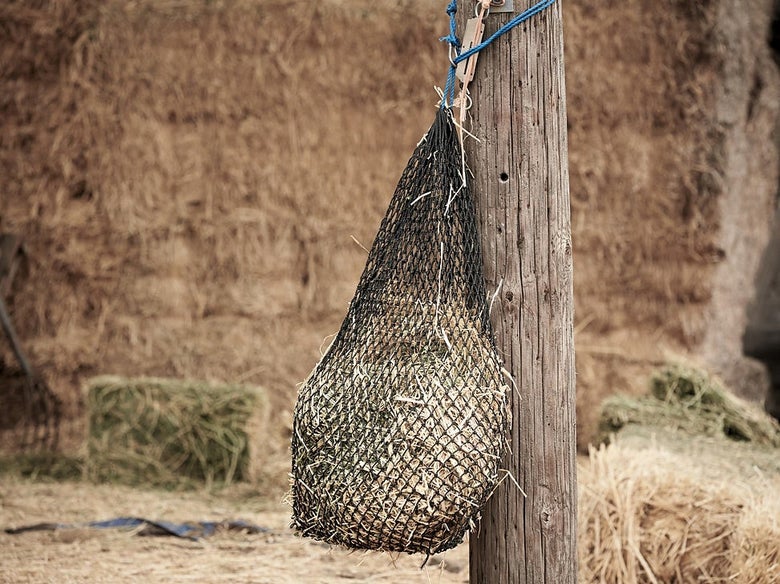
Shires Greedy Feeder Slow Hay Net
This slow-feeder net is a great option for universal use. If you have a horse that is particularly prone to gorge and overeat, this feeder by Shires has smaller-sized 1" holes to really help prevent them from eating too much too quickly. With different hay capacity options to choose from, you can also easily monitor your horse's intake. This hay net is particularly helpful for horses that are a little too efficient at pulling wads of hay out from slow feeders; the smaller holes on this net ensure your horse has to work even harder for their food, naturally slowing them down more. Bring on the mental stimulation for those indulgent eaters!
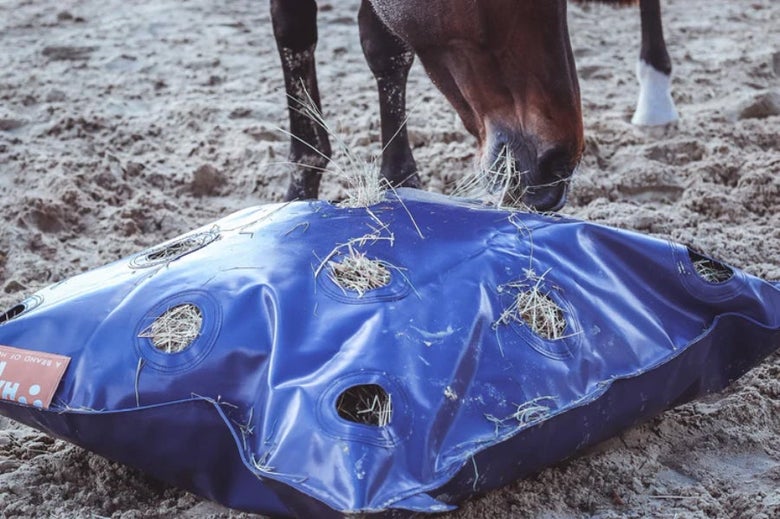
GG Equine HayPlay Bag XL
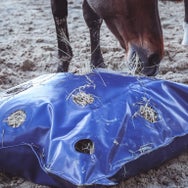
The perfect solution for long-term slow feeding, the GG Equine HayPay Bag is designed to allow your horse to eat in a natural head-down position. This feeder will hold almost a full bale of hay while keeping it contained, resulting in cleaner hay and less waste. Non-toxic, weatherproof, and PVC-coated, this hay bag can withstand extreme temperature fluctuations without weakening. A solid back side enables ground feeding, or you can hang this bag by the heavy-duty mounting holes for stall use. This easy-to-fill hay bag is ideal for any horse, with triple-reinforced 3" holes that provide frustration-free feeding for your best equine friend!
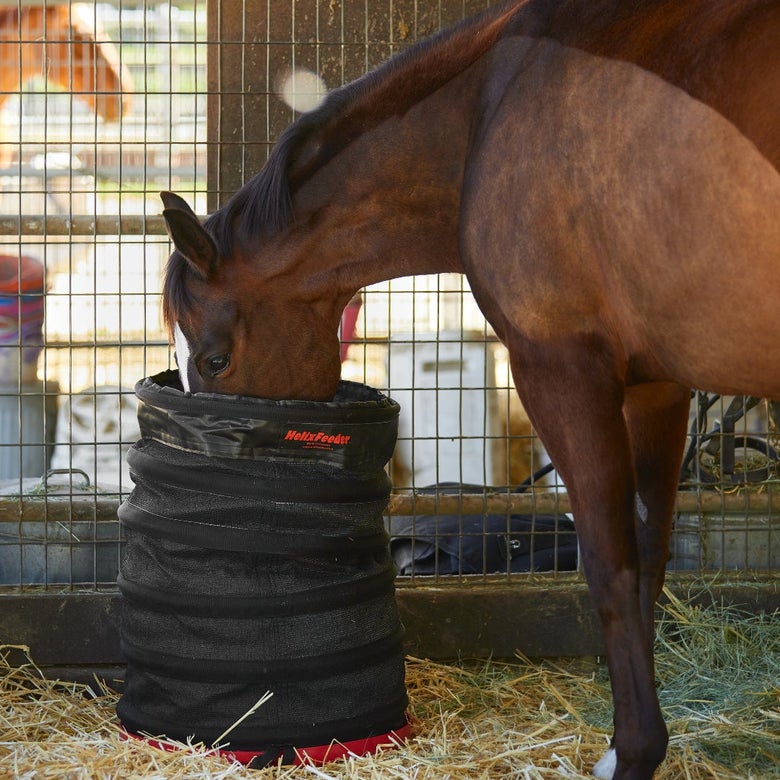
Kiwi Helix Slow Feeder Gen II
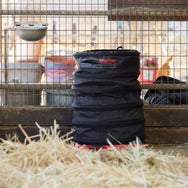
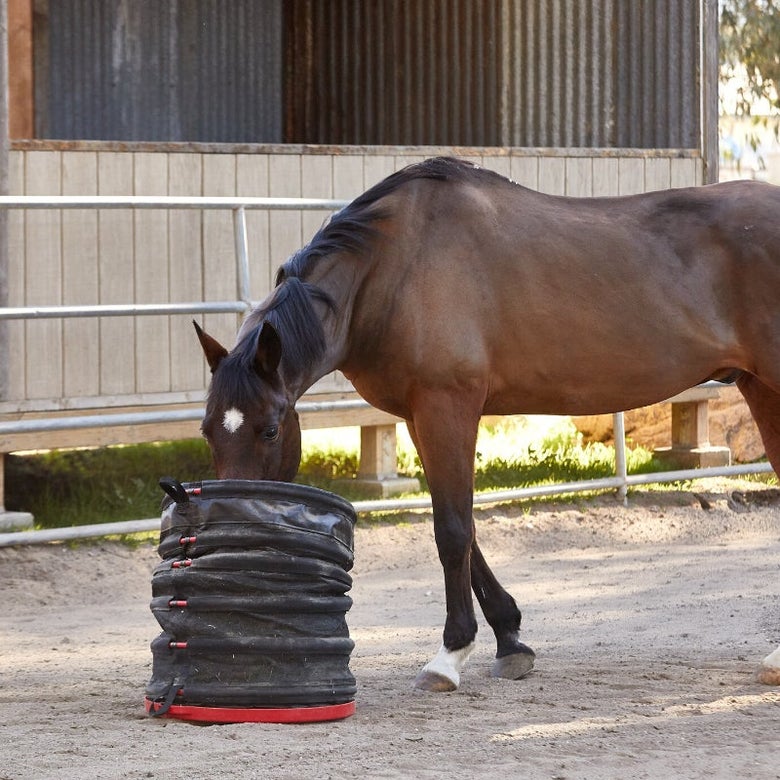
Well-suited for managing horses with laminitis, the Kiwi Helix Adjustable Collapsible Slow Feeder Gen II makes slow feeding as easy as can be. This feeder allows you to soak hay easily and will drain itself as your horse eats. The design mimics the natural head-down grazing position, and the feeder never obscures your horse's vision; it collapses as they munch away! With its unique construction that uses no strings, netting, or ropes, even shod horses are much less prone to getting tangled or caught. A reinforced, durable mesh construction makes the feeder sturdy enough for even the most enthusiastic of eaters, while providing a safe slow feeding experience for laminitic horses and all of their equine pals!
A slow feeder is designed to imitate a horse's natural 24/7 grazing behavior with free-choice foraging when access to fresh grass isn't available. Slow feeders are wonderful tools to balance calorie intake when your hay does not quite meet your horse's nutritional needs. Increasing chewing time through slow feeding can help with improving behavioral responses, lowering ulcer risk, and managing hormones. If your horse is already getting its proper calorie intake and nutritional needs met through your current feeding program, we do not suggest changing the system (especially if your vet or equine nutritionist approves)!
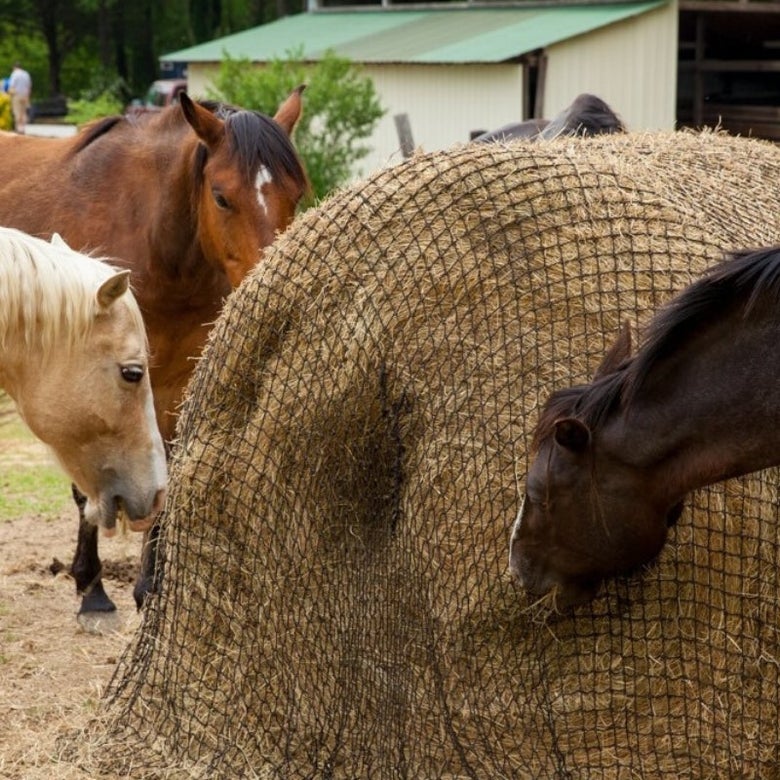
For easy keepers or overweight horses, slow feeding helps regulate insulin and metabolism fluctuations that contribute to putting on pounds. Slow feeding improves digestion and the absorption of calories and nutrients for underweight horses as well. This feeding method can also be a great option for horses that eat their hay down quickly and then exhibit negative behaviors from boredom.
The main purpose of slow feeders is to increase chewing time while controlling calorie intake with your horse's self-regulation. When used appropriately, horses that are transitioned to free-fed forage through slow feeding can eat more and maintain or lose weight at the same time. As equestrians all know, a well-balanced nutrition plan is essential to your horse's life!
When introducing slow feeding to your horse, we highly recommend going slow! It is best to avoid making feed changes without proper research and planning, as this can add food-related stress to your horse's life. To reiterate, the overall goal is to provide your horse's daily hay requirement through 24/7 forage access. Your horse needs to go through a learning process to know that there will always be hay available through slow feeding. Patience and consistency will help maintain your horse's mental and metabolic health.
If you are feeding tightly flaked hay such as alfalfa, you can pull it apart when putting it in your slow feeder to help reduce frustration. Slow feeding low to the ground or from the ground induces a more relaxed, natural state; if on the ground, protect your slow feeder from excess dirt or damage with a bin (especially if your horse is shod). If your horse is still eating too quickly or gaining too much weight, cut back on the hay portion you are feeding and restrict their intake with a smaller hole size.
It is easier to purchase several slow feeders that hold larger portions of hay (such as a full bale), so you have to refill them less often. Your horse will eventually realize they will consistently have food access.
Introducing your horse to a slow feeder can be a process! Read on for some tried and true tricks from our savvy RW Crew.
Have Multiple Slow Feeders: We strongly suggest having at least two slow feeders per horse, even if stalled together. Having multiple slow feeder locations offers a more steady flow of forage and encourages your horse's natural tendency to move around to graze. Always be sure your slow feeders are secure.
Select the Right Hole Size: Selecting your slow feeder hole size can be tricky. One factor is the size of the horse's muzzle and whether they can use their lips and teeth to get hay out of the hole openings. Typically, it comes down to how quickly the horse tends to eat. Horses that inhale their hay will be likely to do well with smaller openings long-term. It's not a bad practice to have a variety of hole sizes on hand, so you can swap different feeders per season depending on how your horse carries weight in the colder and hotter months.
Repurpose Your Training Feeders: You can continue to repurpose your initial slow feeders with larger holes for trailering, showing, or camping; there is no need to toss them once you transition your horse to a smaller hole size! Traveling tends to induce some stress in horses, and providing a slow feeder with larger holes for easier access can alleviate additional stress.
Add a Digestive Supplement: Because your horse will be consuming more hay than normal with the slow feeding method, adding a digestive aid will help them more efficiently break down their food and better process the hay nutrients. A digestion or gut health supplement can also help reduce the potential of colic!
Material Matters: Avoid metal or steel mesh grates as these can cause dental issues with long-term use. It is better to opt for feeders with soft or flexible constructions.
Slow Feeder Placement: Be mindful of height placement. Horses are designed to eat off the ground. Long-term feeding with their head elevated can cause physical ramifications and potential respiratory issues.
Prevent Injuries: Feeders can get caught on shoes and around legs if not secured well, which can cause life-threatening injuries. When using hay net styles, run the extra string through the bottom of the net and use a clip to attach it back to the net itself. Doing so helps keep your feeder elevated off of the ground after becoming empty.
Maintenance is Key: Check slow feeders daily for damage. Rips and tears can create areas that can entangle a horse in dangerous ways. Make a habit of inspecting them every time you feed to ensure they can be repaired or replaced before causing an issue!
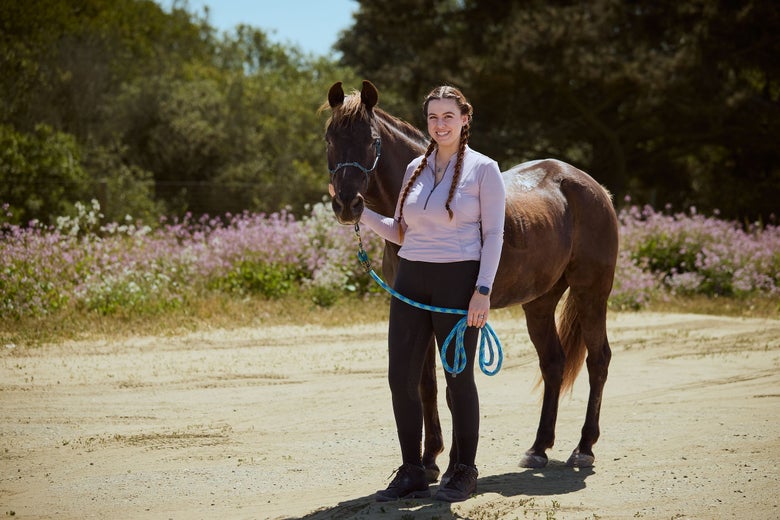
RW Crew member Alison grew up riding horses on the Central Coat of California, and had always fed her horses loose hay twice a day. Due to her horses' food-aggressive tendencies, she decided to see if the switch to slow feeding would ease their anxiety around feeding. Read on to learn about her experience introducing her horses Scout and Bellizo to slow feeding!
Upon the initial slow feeder introduction, both horses received a portion of loose hay for about two weeks. Alongside their loose hay, they received feed in the Tough1 Large Slow Feed Double-Sided Web Hay Net. The 2" x 2" hole size of this feeder was ideal for the horses to eat from at first, preventing them from becoming too frustrated. With their destructive behaviors, I was impressed by how well these hay nets held up to being banged around by Bellizo and Scout. I will admit that both horses stuffed themselves and got porky, as they did not yet understand the idea of hay readily being available to them!
Their loose hay portion was taken away to further slow them down. With being exclusively slow fed, the Tough1 feeder was replaced by the Shires Greedy Feeder Slow Feed Hay Net 1" and Freedom Feeder Single Day Slow Feeder Hay Net. Having more feed always available to them, they did begin to slow down a bit. Over time, both horses showed that they preferred to eat from the 1" hole size. Bellizo and Scout continued to express some agitation while watching the rest of the horses receive their morning and evening feedings. They still thought they were on the same loose hay schedule!
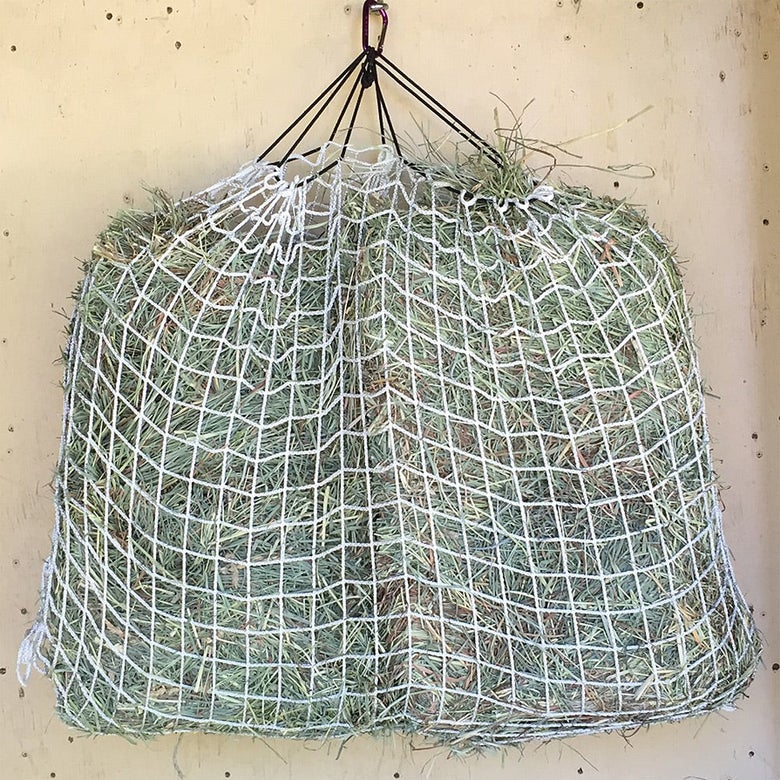
Bellizo is a particularly intelligent horse, and he figured out after about a month that he could walk away from his food and it would still be there when he came back. He has especially slowed down to now enjoy the mental stimulation slow feeding provides him! I noticed Bellizo was more trusting with me around his food; I could safely go in and out of his pen with the slow feeders without him really being bothered. He chews on the fence less and can instead burn off energy and boredom grazing from the feeders.
Scout is still devouring his food. At the rate he was eating, he burned through an expensive amount of hay trying to figure out the concept of slow feeding. Being quite young, he is taking longer to understand that he does not need to stuff himself and can safely eat in peace! On the other hand, Scout paces less and has thankfully stopped chewing the fences. The slow feeders themselves have given him a more productive outlet for his anxious energy and have helped him eat at a healthier pace.
The time invested into filling the slow feeders took longer than expected. It is easier to have a few feeders on hand to provide several grazing positions for the horses, but also to prep ahead of time—ready to replace any empty hay nets. The bigger the hay holding capacity, the less frequent refilling is, although a larger hay capacity also means a heavier weight. Depending on how your horse is stalled, it might be a bit difficult to maneuver a heavy slow feeder around. Durable hardware makes a big difference in helping secure the feeders.
Overall, transitioning my horses to slow feeding was a wonderful learning experience that I would go through again. If it is approached with an open mind, knowing time and money will be spent, slow feeding is a great way to address your equine's nutrition or eating habits. Being flexible and listening to what your horse is telling you will result in an improved equine relationship!
It's a good idea to speak with your barn management before buying a slow feeder. While it is up to the horse owner on what kind of feeding regime they feel is right for their horse, barn management can refuse to allow them; this is typically not done to be difficult, but barn staff can work long and hard hours for not a lot of money. If every horse in the barn has a special feeding program, it can easily add hours to the workday. Talking to your barn management about the type of slow feeder you want to use and whether it would be feasible is considerate, and it may warm them up to the idea! If considering a pasture slow feeder for a shared field, be prepared for rejection unless all horse owners involved agree to use slow feeders.
Listed below are a few options to consider for happy staff at your barn:
When boarding, the barn staff helps make our horse's world go 'round! We recommend including them in your slow feeder decision, so they can offer their insight while feeling appreciated. It's a triple win when all participating parties can feel happy and cared for.
Slow feeders are helpful in managing aggressive food behaviors in horses. Bad habits like cribbing are usually caused by underlying issues, such as boredom. Slow feeders give bored or aggressive horses a positive energy outlet. Ulcers can be caused when stomach acid levels rise due to too long a time between feedings, leading to other negative behaviors. Slow feeders give your horse a steady feeding schedule to help protect against ulcers and their side effects. Horses that are anxious during feeding times can develop food-related stress. Slow feeders provide constant access to food and, therefore, can help lower stress levels and prevent poor or aggressive behaviors.
It is best to choose a hole size that will slow down eating to mimic the grazing effect, but not one small enough to cause exasperation in your horse. If your horse is refusing to eat at all with a slow feeder, they are likely too frustrated. It is best to introduce slow feeders with a larger hole size, then move to smaller holes after your horse adjusts to the slow feeder concept.
Slow feeders are quite safe when used properly. It is important to purchase a hay net or bag that is made of high-quality materials to prevent breakage of the feeder or hazards to your horse. Be sure the slow feeder is secured to prevent swaying, and any excess rope or straps are tucked away. Shod horses can get shoe nails stuck or shoes pulled off if snagged on a hay net; make certain your slow feeder is hung high enough to prevent entanglement, but low enough for a normal eating position. Improper height placement can cause neck and back issues in your horse. If you feel a slow feeder hay bag or net is not quite right for your horse's feeding environment, we encourage you to learn more about the different Types of Horse Feeders.
Hay nets are not bad for your horse's teeth as long as they are high-quality nylon or polyester and are not constructed from steel, wire, or metal parts. However, that is not to say that metal feeders or grates are necessarily detrimental to your horse's dental health. Slow feeding can actually help manage dental risks caused by underlying conditions, such as laminitis or high-sugar diets. If your horse does experience any dental issues with a hay net or slow feeder, please consult your veterinarian immediately.
Introducing a slow feeder can greatly improve your horse's health by promoting a more natural grazing pattern. We all wish we could provide our equines with ample amounts of land covered in healthy grass to graze on, but that just isn't the reality for most horse owners. Some horses have injuries and other health issues that make this impossible, but their digestive system still functions best on continuous grazing. Slow feeders can improve behavioral responses, prevent and manage issues, as well as promote a healthy weight. This is made possible by simply giving your horse the ability to eat the way nature intended, with a little help from the technology of slow feeders!
If you are considering trying slow feeding, we strongly encourage speaking to your vet or equine nutritionist before changing your horse's current feeding program. For more information on slow feeders, please reach out to our helpful customer service at info@ridingwarehouse.com or 1-800-620-9145. Happy feeding!