Helmets & Protective Gear
Riding Helmet Safety Standards
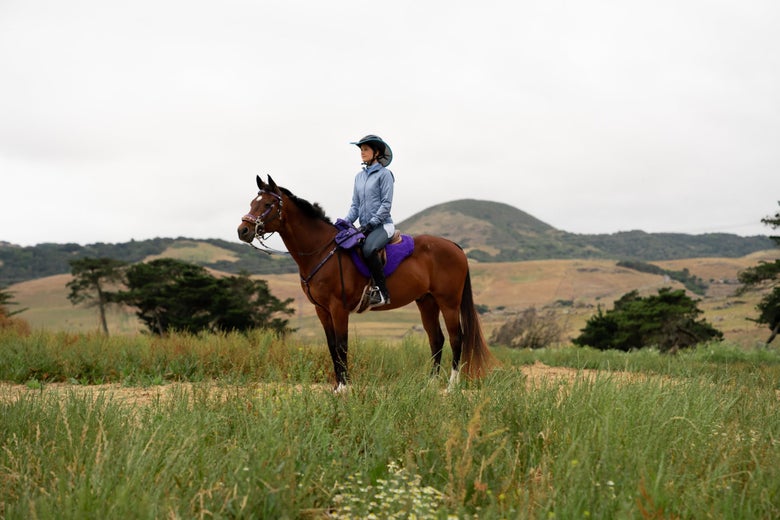
Selecting the best equestrian helmet visor for your needs is an important step in ensuring your safety and comfort while riding in sunny and hot conditions. At first glance, choosing a helmet visor seems fairly straightforward; however, the truth is that there's more to finding a good visor than meets the eye. Riders often find themselves frustrated when their newly purchased visor doesn't fit well or doesn't provide adequate sun protection during their rides.
Imagine enjoying a bright sunny trail ride, only to find that your face has been sunburned because your visor doesn't offer sufficient protection against harmful UV rays. Or worse, you discover that the visor doesn't fit your helmet properly, making it uncomfortable and annoying to wear for extended periods! These situations can not only be annoying but also potentially dangerous; a visor can easily fly off and spook your horse if it's not secured correctly.
In this comprehensive how-to guide, we will cover the various factors that riders often overlook when selecting an equestrian helmet visor. Follow along as we discuss helmet visor compatibility, UV protection levels, different brim styles, and more! We are here to help you narrow down the options to find the perfect visor for your particular riding needs.
Helmet visors are made in a variety of shapes, styles, and sizes. To help you determine which visor may best suit your needs, our savvy crew has put together the following table outlining different features of the helmet visors available at Riding Warehouse.
| Helmet Visor | Coverage | UPF/UC Protection | Water Resistant Material | Attachment |
| Cashel Helmet Brim | 5.5" Front, 4" Side | Not Rated | No | Velcro Closure |
| DaBrim | 3.5" Front, 4.5" Rear | 50% | Yes | Elastic Band |
| DaBrim Petite | 2.5" Front, 3.75" Rear | 50% | Yes | Elastic Band |
| DaBrim Rezzo | 4" Max | 50% | Yes | Elastic Band with Velcro |
| EquiVisor | 4" Max | Not Rated | No | Velcro Closure |
| EquiVisor Sport | 4.5" Max | Not Rated | No | Gripper with Loop Exterior |
| EquiVisor Sport Shorty | 3" Max | Not Rated | No | Gripper with Loop Exterior |
| EquiVisor Sport Vue | 4.5" Max | 95% | No | Gripper with Loop Exterior |
| Helmet Brims | 3.75" Max | 82.5% | No | Elastic Band with Velcro |
| Salamander Beak | 3" Max | Not Rated | Yes | Velcro Adhesive |
| Soless Classic | 4.5" Max | 92% | Yes | Buckle Closure |
| Soless Velcro | 4.5" Max | 92% | Yes | Velcro Closure |
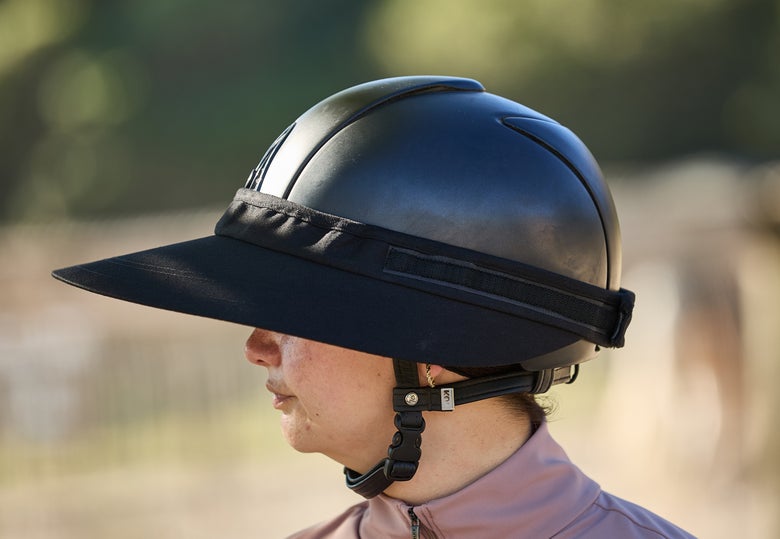
"I love my EquiVisor - I really can't go without it anymore. I'll be honest, I am not great about putting on sunscreen when I get to the barn because I hate the smell and it runs into my eyes when I sweat. The EquiVisor is a lifesaver when it comes to easy, instant sun protection. The brim is wide enough to shade my face and even my ears, which is awesome. It is super lightweight, so besides feeling the sun out of my eyes, I forget it's on my helmet.
The long Velcro strap makes it really easy to adjust adn take on or off, and it's so adjustable that I've even worn it as a hat in a pinch. The inner grip also helps keep it in place, so I don't have to worry about losing it if I'm out on the trail or spooking my horse by it flying off (major plus!)."
-Danielle, Marketing

"I've had the Soless Classic Visor for about five years now, and it still looks practically new. It's super easy to put on and take off, stays secure while riding, and provides great sun protection. I also love how easy it is to clean - arena dust wipes right off! A simple add-on that has made my rides exponentially better!"
-Delaney, Web Content
Consider these three factors to aid you in determining the most compatible visor for your helmet: how permanent you would like the visor to be, what conditions will you be riding in, and which particular helmet are you placing the visor on?
The various mechanisms used for visor attachment can affect your choice, because some visors are more readily removable from your helmet than others. For instance, a Velcro attachment allows easy on and off for the visor itself, but it may not be the best choice for riders who don't want permanent Velcro strips on their helmet. Most visor attachment mechanisms are more temporary, either using an elastic band that slips over the brim of the helmet, or a buckle closure that fastens at the helmet's base.
Most helmet visors are a standard size in order to accommodate a variety of helmet sizes and shapes. Visors that attach with Velcro pieces can be trimmed for any helmet size. Elastic visors have inserts that can stretch over a youth helmet and fit up to an adult helmet. Buckle-closure visors are extremely adjustable and therefore fit the widest range of helmets, making them a great choice for smaller helmets.
Whether you're zooming down the trails or schooling in the arena, the riding conditions will also impact your visor choice. Those who ride in unpredictable weather like wind, or even riding at speed, will want to select a visor noted for the most secure helmet attachment. Some models allow you to add on separate parts to increase the security of the visor, as is the case with the Soless Visor and No More Fly Away Detachable Brim Clip. If an elegant and professional appearance is a priority, such as for a dressage clinician working in a more stable environment, the EquiVisor offers a classy look in its jute and cosmic black color options.
Sun protection is the most obvious and important factor to consider when choosing an equestrian helmet visor. Avoiding damage to your skin and eyes courtesy of shade from a visor is crucial, but the visor materials used can make a big difference in your level of protection.
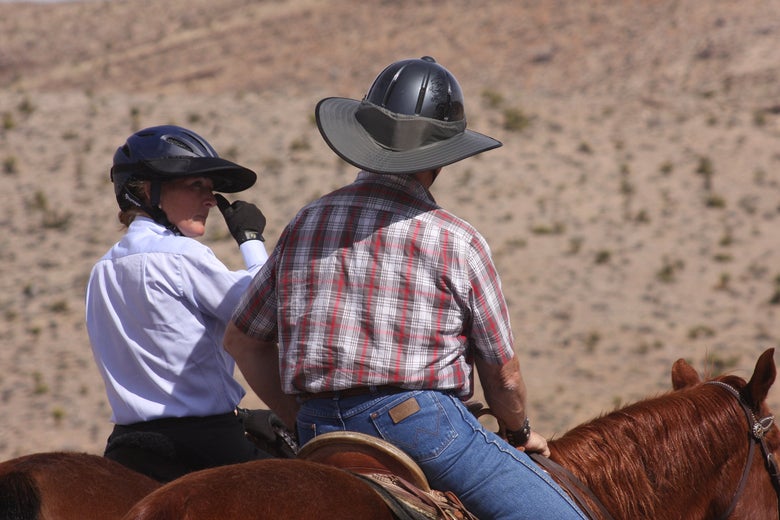
The materials change a visor's ability to block out sunlight, both visually and in terms of UV rays. For example, the Helmet Brims Horseback Riding Visor is made from Australian Shade Cloth and can block up to 82.5% of UV rays. On the other hand, the DaBrim Visor is crafted from nylon and rated for UPF 50+ protection. If you are hoping for great UV protection without completely blocking the sunlight, the Soless Classic UV-Blocking Visor is a top choice; its brim is made out of UV-protective polycarbonate film. While it blocks 92% of UV rays, it still allows a reduced amount of light through its transparent material, enabling the rider to experience their full range of vision.
Aside from shielding your face from the sun, a helmet visor can offer limited protection against other elements such as light rain. The aforementioned Helmet Brims Visor and the DaBrim Visor are water-resistant options that can effectively shield your face from a measure of direct rain as well.
You'll want to consider brim size and shape based on how much protection you are looking for from your helmet visor. The various brands can differ greatly: from those resembling a large sun hat with more coverage, to minimalist designs resembling the front-focused facial coverage of a baseball cap.
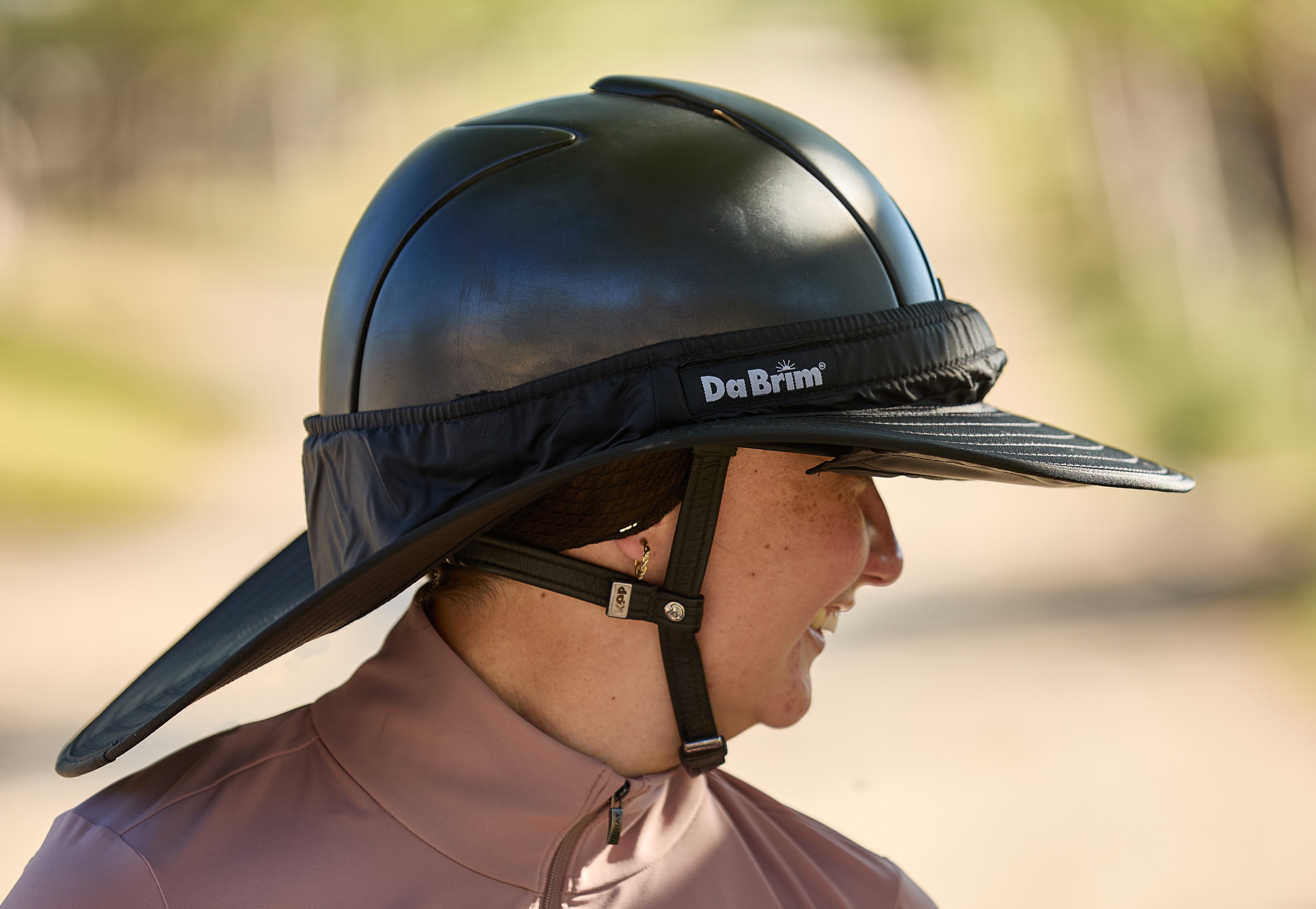
If you are hoping for 360-degree sun protection to maximize shade around your helmet, the DaBrim or Helmet Brims Horseback Riding Visor are ideal options. Both visors wrap around the entire helmet to offer coverage over the sides and back of your neck. These full-coverage visors are most popular among trail and endurance riders, or other equestrians who spend many hours in the sun.
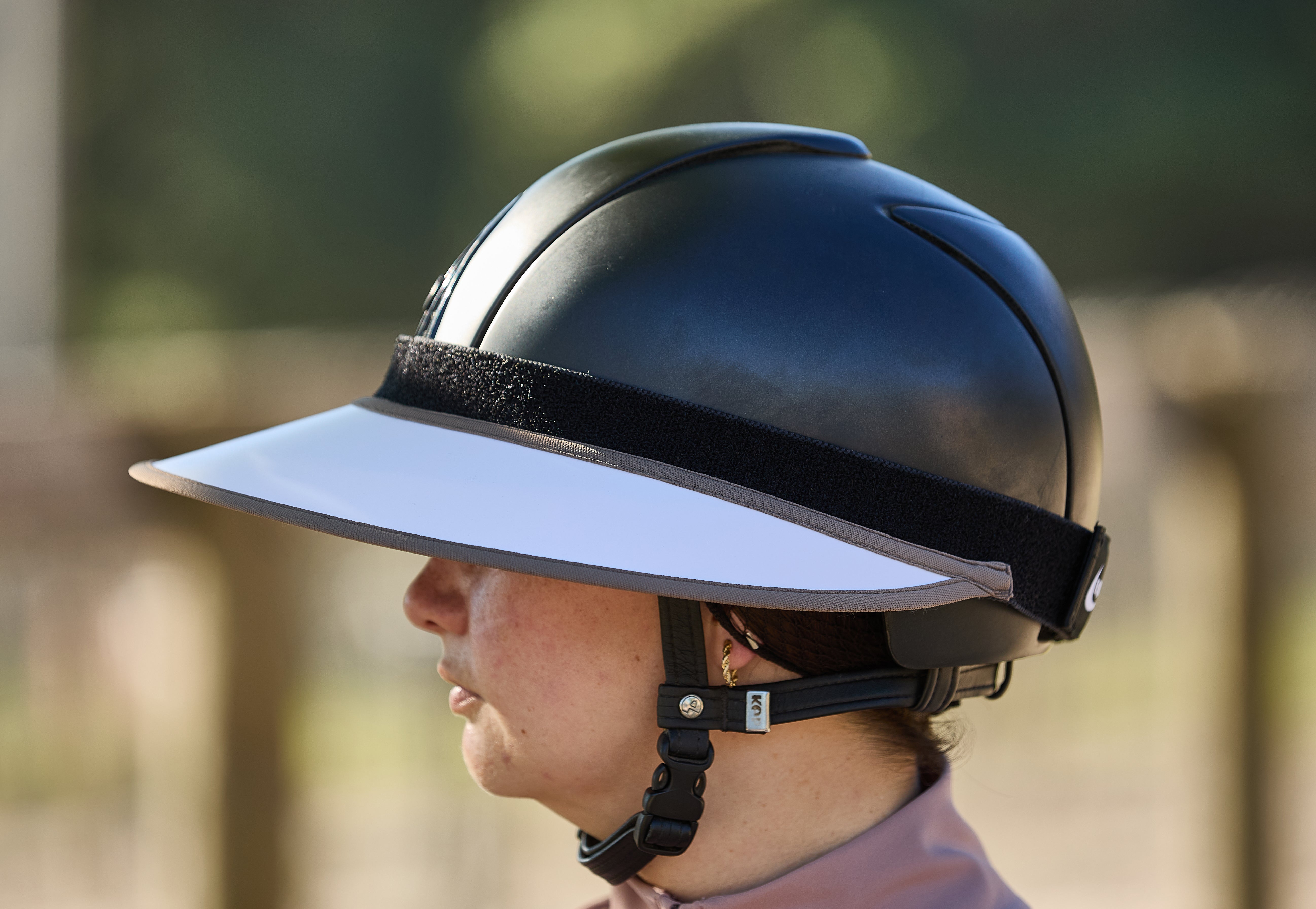
Some visors only protect your face and leave your neck exposed. These visors provide more ample coverage in the front and significantly cut down on glare as you ride. These minimalist kinds of visors may also better fit the helmet and visual profile of petite or junior riders, while still offering a huge improvement over most standard helmet brims. Trail and endurance riders will love the basic functionality and sporty good looks of the Salamander Beak. The Soless Classic Visor and EquiVisor offer a longer extended visor, and they are very popular choices for English riders.
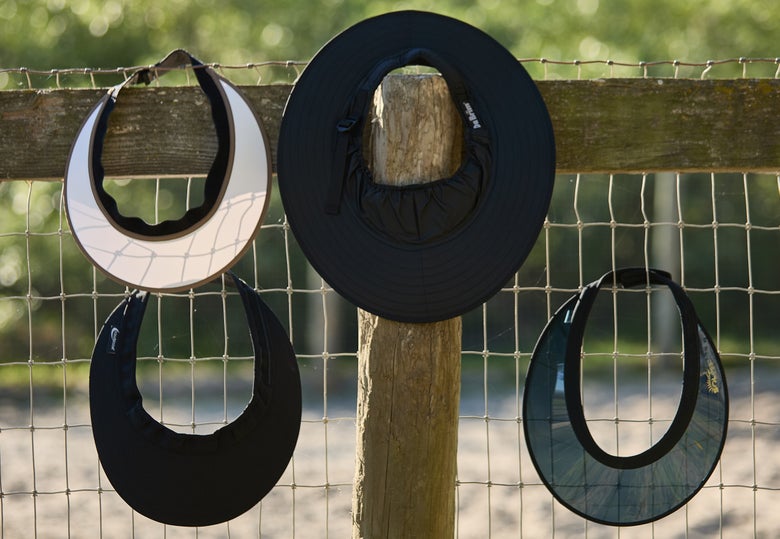
Equestrian helmet visors do come in different sizes, in relation to the visor shape and length that determines the level of coverage. The visor brim can vary in length, with shorter brims leaving you more exposed and longer brims offering improved coverage. As we previously addressed, some helmet visors offer 360-degree protection all the way around for full coverage from the sun. Other helmet visors offer face-only coverage that leaves the neck exposed. Everyone has a personal preference, and one size over the other is not necessarily better or worse—purchase the helmet visor that fits your helmet and suits you!
Determining whether your helmet actually fits you or not can be tricky. That's why we encourage you to read our educational guide on How to Size a Horse Riding Helmet. Once you have your helmet fit narrowed down, you need to consider what kind of visor attachment you are willing to work with. Whether it is a buckle, elastic, Velcro, or adhesive attachment, it might take some trial and error to find what visor best stays put on your particular helmet. Trust us when we say that you'll know whether your helmet visor fits; if it doesn't, you will see it fly off during your ride!
The best helmet and visor combination is the one that works for you and your riding needs! We always encourage customers to read individual reviews for insight, but we invite you to check out our Best Horseback Riding Helmets for further information on helmets. Please be aware that we cannot guarantee which riding visor is the best fit for your particular helmet, because helmet visors are essentially a one-size fits all! Helmet materials, size, and brim style are also all factors; we suggest revisiting our visor comparison chart to determine what is most important to you.
Equestrian helmet visors offer horseback riders improved sun protection and comfort while they are out and about with their equine pals. It is important to think about the riding conditions you will be in to ensure your visor is compatible with the environmental elements. Carefully weigh and prioritize how much UV protection you would like, the level of coverage you want, and whether you wish to permanently modify your helmet. Think about which factors are negotiable and non-negotiable to make sure your quest for the perfect helmet visor is successful. Please feel free to contact our customer service team at 1-800-620-9145 or info@ridingwarehouse.com if you need any assistance. As always, happy riding!