How to Choose the
Best Western Saddle Pad
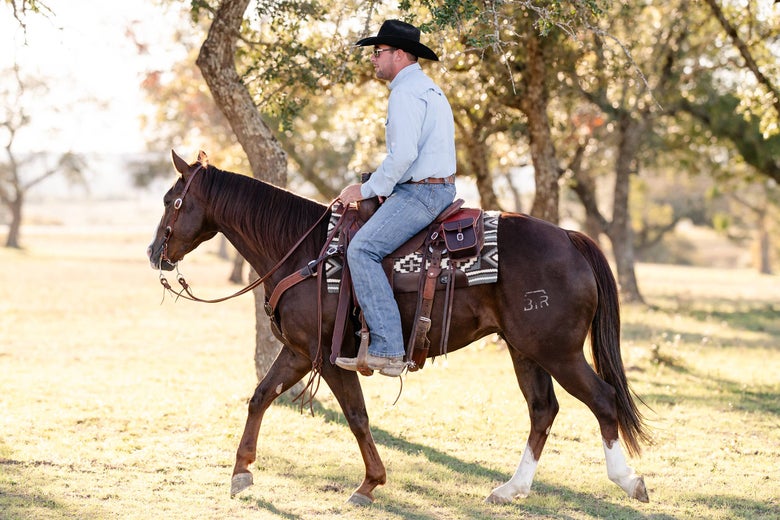
People often look at saddle pads as an accessory, focusing on the color or appearance rather than the technology or functionality. A carefully selected western saddle pad will protect your horse's back and help them move more comfortably, and knowing how to choose the right saddle pad is an important skill for any rider. Understanding how each feature and variable affects your horse's performance can inform your final decision.
Riders can begin the saddle pad selection process by considering their riding discipline, saddle features, horse's conformation, and even the level of care the pad will require. We've built a complete guide with these factors in mind to explain common styles, materials, shapes, and sizes to help you find your perfect western saddle pad!
What Should a Saddle Pad Do?
No matter the discipline, a properly fitting and appropriately styled saddle pad should be well-suited to protect your horse's back and help them perform their best. Additionally, certain saddle pads can aid in saddle fit but should not be a substitute for a well-fitting saddle. Thickness and shim-ability are factors that play a large role in determining proper fit, since using the wrong pad can amplify poor saddle fit and even cause problems for you and your horse.
Benefits of a Saddle Pad
The popularity of using saddle pads makes sense when you consider the wide range of benefits for the horse and rider, such as:
- Absorbing and wicking away sweat
- Improving saddle balance for rider stability
- Distributing saddle and rider weight
- Protecting the saddle
- Increasing horse and rider comfort
- Absorbing shock and reducing pressure
- Compensating for minor saddle fit issues
A saddle pad is a tool designed to complement both horse and saddle to create the most comfortable feel for optimal equine performance in your discipline.
Western Saddle Pad Top Picks
Best Felt Western Pad
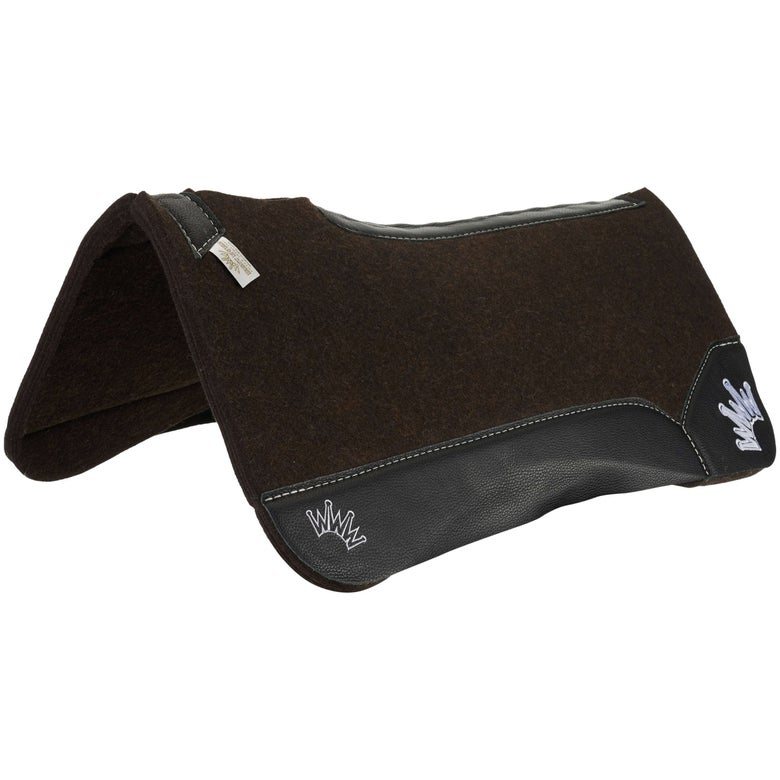
Best Ever Pads OG 1" Felt Western Saddle Pad
This staple is called "OG" for a reason. Why mess with perfection? With classic needle-punch wool felt, this breathable saddle pad delivers shock absorption, firm yet flexible support, and protection. Whether you need an all-purpose saddle pad that can do everything, or one that provides support during high-performance events, the OG pad is ideal for both!
| Key Takeaways: |
Ideal for Daily Riding and Ranch Work Top Quality 100% Needle Punched Wool Shock-Absorbing with Great Compression Protection Suitable for Barrel Racing, Gymkhana, Team Roping, & Ranch Riding Available in 30x30 and 32x32 Sizes Color Can Vary |
Best Western Pad with Shims

Diamond Wool Contoured Western Saddle Pad with Shims
If you are looking for a pad with shims, then you are likely struggling with a saddle that is not quite fitting your horse's back properly. This can be caused by asymmetrical muscle development, a senior horse with a dropped topline (aka "sway back"), a recovering horse with an underdeveloped topline, or a young, green horse. The Diamond Wool pads have six removable shims crafted from 1/2" of wool felt that absorbs impact and improves saddle fit. The customizable nature of this pad allows it to correct a wide range of issues and continue to grow with your horse through the years.
| Key Takeaways: |
Soft, Durable 1" Needle-Pressed 100% Wool Felt Anatomically Contoured Design Weather-Resistant Cotton Duck Top Six Removable 1/2" Wool Felt Shims 100% Handmade in the USA Available in 30x30 and 32x32 |
Best Orthopedic Western Pad
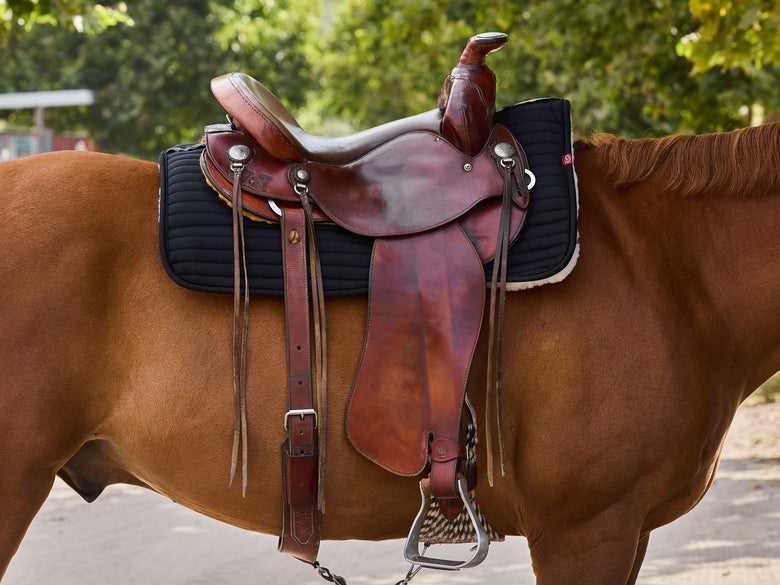
Toklat T3 Matrix WoolBack Western Shim Pad Ortho-Impact
We love the Toklat T3 Matrix Shim Pad because it provides durable orthopaedic support for your horse and easily solves your minor saddle-fit issues with its highly customizable shims (12 total)! Strategically placed, these shims can be adjusted front-to-back to balance the saddle and prevent rocking or bridging, then side-to-side to fill in voids created by asymmetrical muscle development. The Ortho-Impact offers memory foam inserts bonded with 5mm XRD foam for up to 90% impact protection. Designed for underdeveloped toplines, senior horses, past or recovering back injuries, and moderate performance riding. Add serious, customizable protection to your ride.
| Key Takeaways: |
1" WoolBack Lined, 100% Natural Virgin Wool Excellent Pressure Relief Extremely Lightweight & Breathable Contoured High Profile for Wither Clearance Twelve Total 1/4" Felt Shims: 2 Front, 2 Middle, & 2 Rear On Each Side Available in Ortho-Impact, Extreme Pro-Impact, & FlexForm |
Best Non-Slip Western Pad
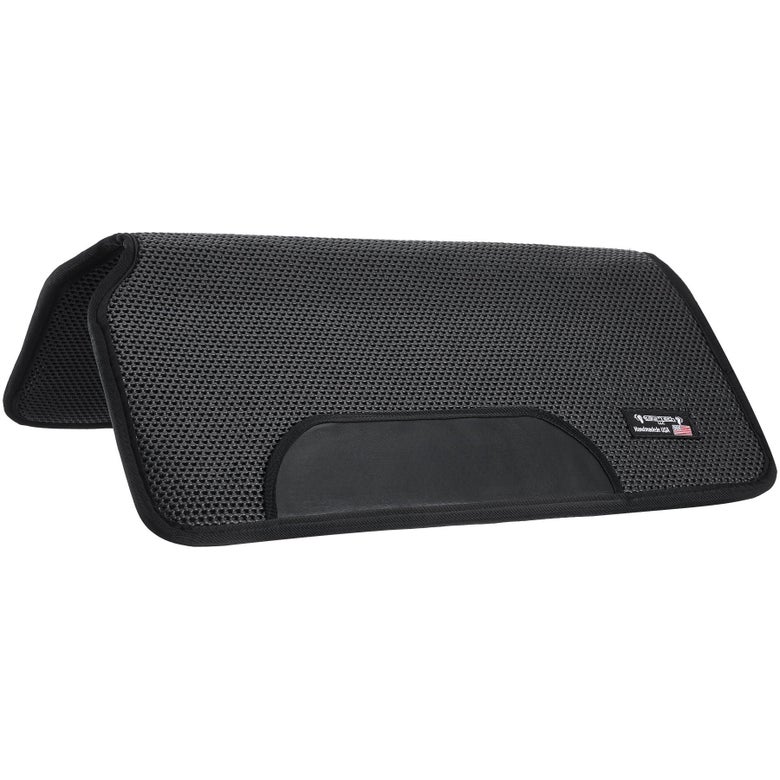
Equi-Tech Tacky-Tack Non-Slip Western Saddle Pad
Saddle slipping is a thing of the past. Crafted from a soft, ventilated material, this saddle pad allows heat to dissipate while firmly securing your saddle in place. Additionally, the non-slip material is fast-drying and easy to clean off sweat and hair. The cutout at the wither improves the fit on high-withered and low-withered horses alike, ensuring there is no pinching throughout your ride. Built for performance riding and daily riding with shock-absorbing construction.
| Key Takeaways: |
Soft, Ventilated Tacky Material Breathable Construction Vents Heat Easy to Remove Sweat and Hair Slip-Resistant Construction Wither Cutout for Improved Comfort |
Best Wool Blanket Top Western Pad
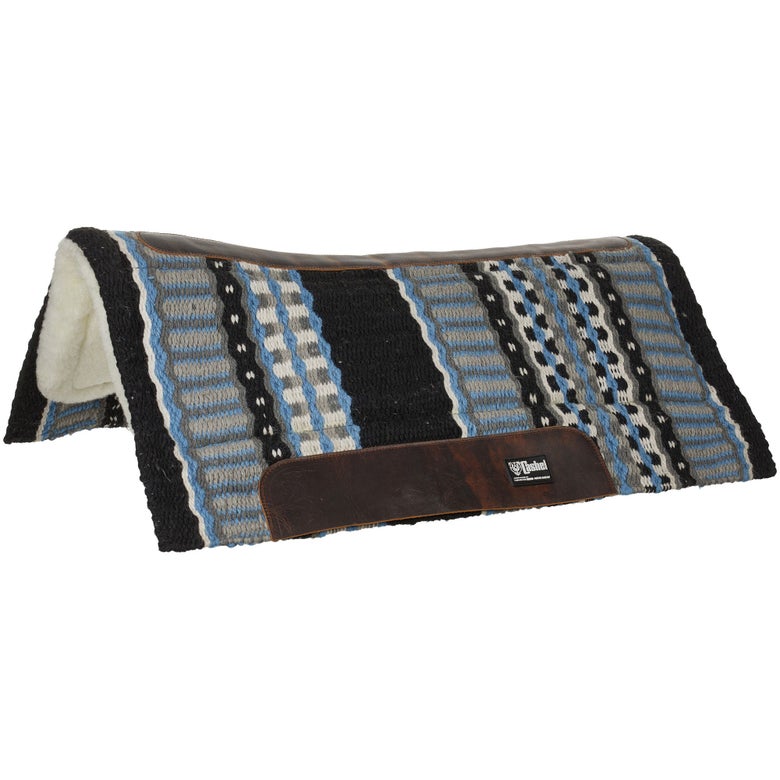
Cashel Blanket Top Performance Saddle Pad
Mixing a traditional saddle blanket with a typical western pad results in the Cashel Blanket Top Performance Saddle Pad! We picked this pad for its vibrant, western pattern that is bound to be noticed around the showgrounds or ranch. Finished off with durable wear leathers that provide longevity and a contoured spine that offers comfort to your favorite equine—all at a great price point.
| Key Takeaways: |
3/4" Pressed Felt, Merino Wool Bottom Western-Themed & Vibrant Pattern Wool Blanket Top Contoured Shape for Wither Clearance Distressed Wear Leathers for Durability Also Available in 34 x 38 Size |
Best Western Pad for the Performance Horse
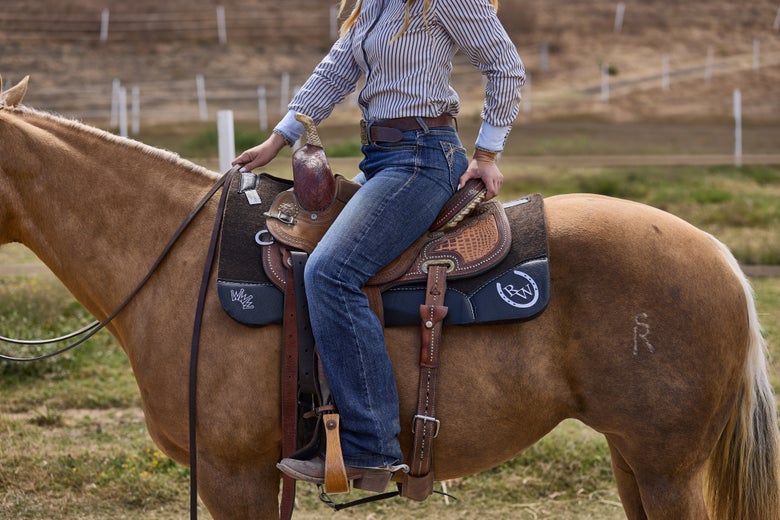
RidingWarehouse by Best Ever OG Felt Western Saddle Pad
The RidingWarehouse by Best Ever Pads OG Felt Saddle Pad is an obvious choice for the performance horse. Specifically engineered for high-performance events like barrel racing, team roping, ranch rodeos, and more, this pad checks all the boxes that you need in demanding disciplines (Not to mention representing your favorite brand while doing your favorite events!). Get the most out of your performance horse by gearing up with this top-quality pad from Best Ever!
| Key Takeaways: |
Engineered for High Performance Events Top Quality 100% Needle Punched Wool Shock Absorbing & Breathable Riding Warehouse Branded Available in 30x30 and 32x32 Sizes |
Best Western Pad for Ponies
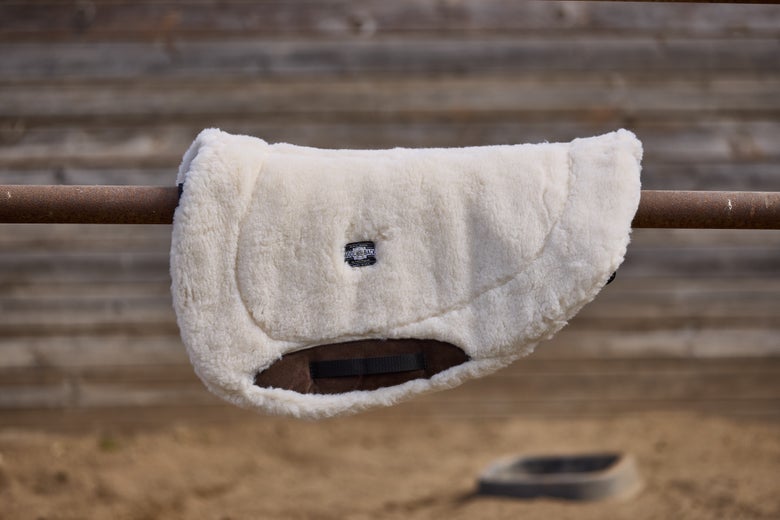
Toklat WoolBack Round Saddle Pad Contoured 28x28
Small but mighty and built to fit perfectly on the littlest ponies. Small doesn't mean you lose any features. Toklat's classic Woolback construction offers 100% wool fleece for superior moisture-wicking and non-slip features. The contoured topline conforms to their back, preventing any pinching or discomfort. Browse the wide range of Toklat pads for your perfect additions!
| Key Takeaways: |
100% Woolback Fleece Contoured Topline Brown Suede Wear Leathers Non-Slip and Moisture-Wicking Available in Triple Thick |
Saddle Fit
The fit of your saddle will have a major impact on your (and your horse's) riding experience. On a base level, poor saddle fit can prevent horses from moving comfortably—thus heavily impeding their performance, as well as creating lasting injuries from compensating for pain and discomfort. Furthermore, a poor saddle fit can cause rubs and more surface-level sensitivities.
A saddle that's properly fitted will keep everyone involved happy, but we know that a horse's body will change over time with age, muscle development, and more. Maintaining the perfect fit 100% of the time is a big ask, and this is where saddle pads can help pick up the slack. Meant for minor fit differences, like those due to horse fitness and muscle level, different saddle pad features (such as shims) are ready to step in.
If you are uncertain about whether or not your saddle is a good fit, you should seek out a professional saddle fitter who can help make adjustments or recommendations to achieve a better fit. Though the service can be expensive, the feedback you receive from a saddle fitter can be priceless. For horse owners who cannot afford a professional saddle fitter, there are many resources available online to provide education on the science behind saddle fit. Or, you can enlist the help of a trusted friend with experience fitting several saddles to different kinds of horses.
Determine Saddle Pad Size & Shape
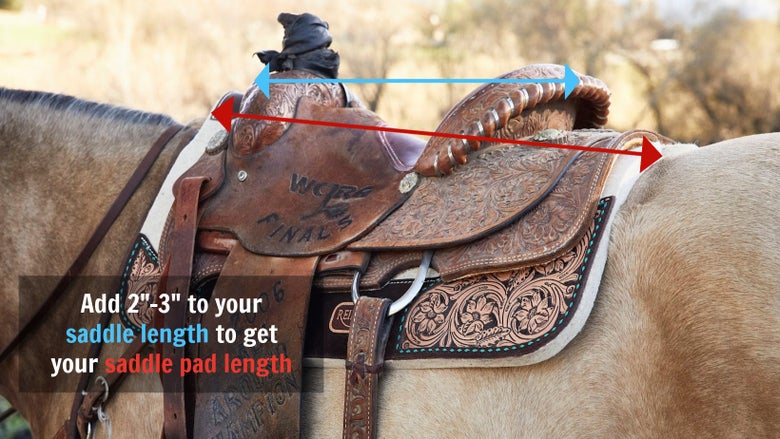
Once you are sure your saddle properly fits your horse, the next step is to address what saddle pad length and drop will best suit your saddle. To further understand where these saddle pad dimensions come from, we invite you to learn more in our guide on How to Measure Saddle Pads. As a general guideline, it is best to add about 2-3" to the length of your saddle (front to back) to find the correct saddle pad size. A pad that is too short will provide insufficient coverage and weight distribution, while a pad that is too long may impede motion or saddle function. If you are unsure how to find your saddle measurements, please check out our guide on How to Measure a Saddle!
Saddle Pad Shape
Once you know the saddle pad size you should be keeping an eye out for based on your saddle measurements, the next step is to pick a general shape for your pad. You will see two saddle pad shapes in most western disciplines like barrel racing, roping, reining, cutting, and western pleasure: square and barrel. Round saddle pads are very similar to barrel saddle pads, typically with more of a cutback to put even less material on the horse's back and reduce heat, making them ideal for sports like trail riding and endurance. However, round saddle pads can be found in any discipline!
- Square-shaped western saddle pads are more commonly seen accompanying saddles with square skirts. They have more material to provide additional shock absorption and weight distribution for higher concussion sports.
- Round and barrel-shaped western saddle pads are a great option if your saddle has a round skirt or your horse has a shorter back, freeing up the horse's movement by eliminating excess material.
Saddle Pad Wither Shape
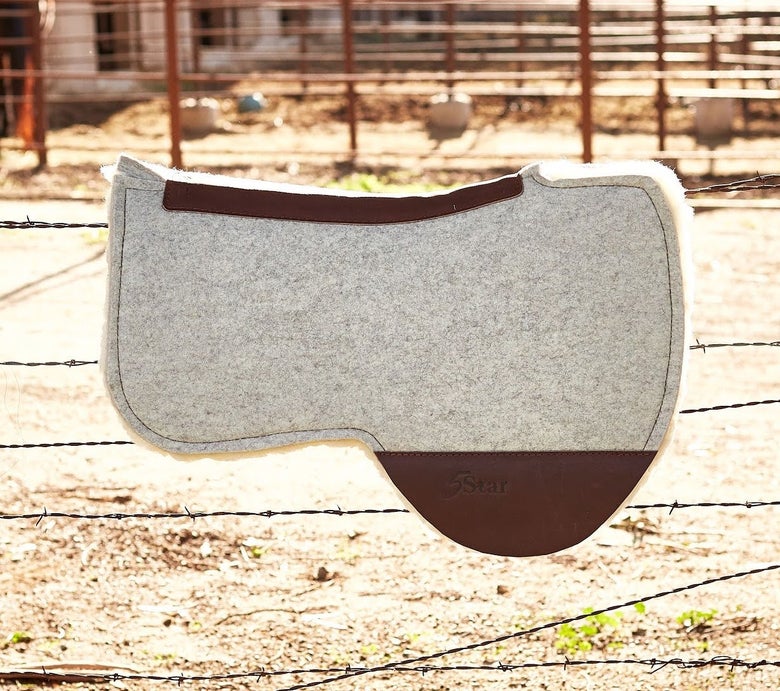
The shape of the front of the saddle pad should be considered when choosing a new pad, as some pad shapes may be better suited for different horse conformations. Horses with high or further back withers will benefit from a different pad design than those with low or forward withers.
- Contour: A contoured saddle pad has a higher front to relieve pressure from the withers. This is a great choice for high-withered horses or sway-backed horses who need clearance.
- Straight: A straight saddle pad has little to no curve at the front, making it suitable for horses with round or mutton withers—meaning more flat-backed horses. They can also be a good choice for horses with normal wither definition.
- Cutout: A cutout saddle pad has a "cutout" at the top where the horse's withers would be, but it is still connected in the front. This will offer even more relief than a contoured pad, making it a suitable choice for high-withered horses who need more clearance.
- Cutback: Cutback saddle pads have a section cut away from the withers to provide full wither relief. Since there is no material on top of the withers, this is a good choice for very high-withered horses.
Selecting the Right Saddle Pad Thickness
When considering your horse's conformation, it is useful to look at the length of your horse's back and whether they have a swayback or not. Horses with sway backs or less muscle may need a thicker pad to help fill in gaps between the saddle and the horse's back. When choosing how thick your saddle pad should be, consider the length and intensity of your rides, what discipline you ride, the weight of you and your gear, and your horse's conformation. Below is a table to generally guide you on the most common saddle pad thicknesses, their use, and what discipline they are most appropriate for.
| Pad Thickness | Pad Use | Riding Disciplines |
| 1/2" | Showing (allows you to put a blanket over the pad) | Reining, Cutting, Pleasure |
| 3/4" | Daily Training, Short Rides, Showing | Reining, Cutting, Pleasure |
| 7/8" | Daily Training | Trail Riding, Team Penning, Cutting, Reining, Barrel Racing |
| 1" | Heavier Rider, Long and Hard Rides | Ranch Work, Roping, Colt Starting, Intense Trail Riding |
| 1 1/8" - 2" | Very Long or Hard Rides, Intense Performance | Team Roping, Calf Roping, Steer Stopping |
Saddle Pads with Inserts or Shims
Saddle pads with internal technology or shims might be appropriate to aid with proper saddle fit. Inserts and shims are interchangeable terms, and they're integrated inside of and/or on top of the saddle pad. Conformation issues like asymmetrical muscling, high withers, and sway backs tend to benefit from a saddle pad with inserts or shims that can better compensate for these problems. A saddle pad with additional technology is also recommended for those riding in a treeless saddle to ensure that the rider's weight is not pressing into the horse's spine or withers.
Should you wish to proceed with a pad that has either inserts or shims, be certain to check whether they are removable or not. Some are not removable and therefore named "built-in technology," which may not be beneficial for you or your horse's specific needs. A pad with removable technology can be replaced or altered as needed for a further customized fit. Removable inserts and shims allow for adjustments to be made as the horse's body changes over time, or when the saddle pad is used with different horses and saddles.
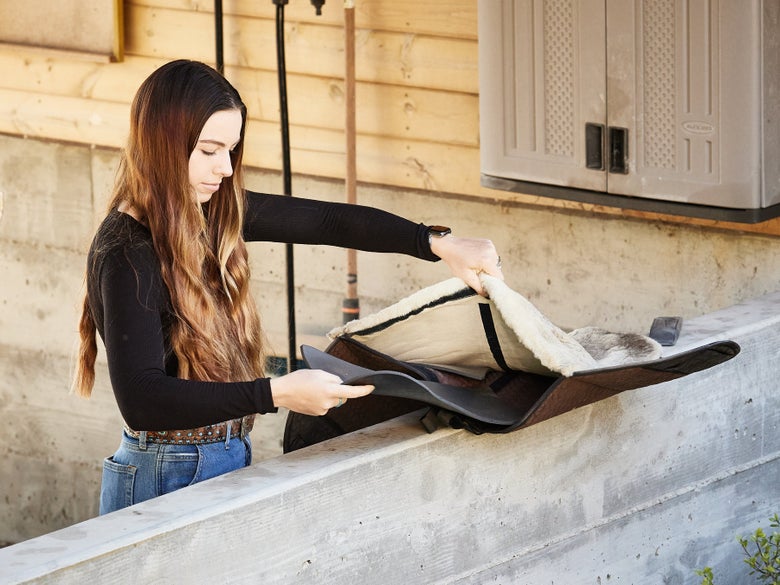
Inserts and shims will add weight to the saddle pad and will often prompt a higher price tag; however, these saddle pads can effectively enhance shock and impact resistance. In general, saddle pads with insert or shim technology are a great option to fill in gaps by providing extra impact protection. Remember that adding extra bulk can be detrimental to the fit of your saddle, so make sure the saddle pad you're considering is not going to be too thick for your needs.
Comparing Saddle Pad Materials
There are many different materials that saddle pads can be made out of, each with unique benefits. Most saddle pad shapes are offered in each of these different materials, so you and your horse can pick the perfect pad combination! When talking about the material of a saddle pad, we are specifically referring to what is touching the horse's back, since some pads might have multiple layers of different materials. The most common materials are wool felt, fleece, and synthetic. For further details on how to care for these varying saddle pad materials, take a look at our guide on How to Clean Saddle Pads. Keep reading to learn the strengths and weaknesses of each type!
Wool Felt
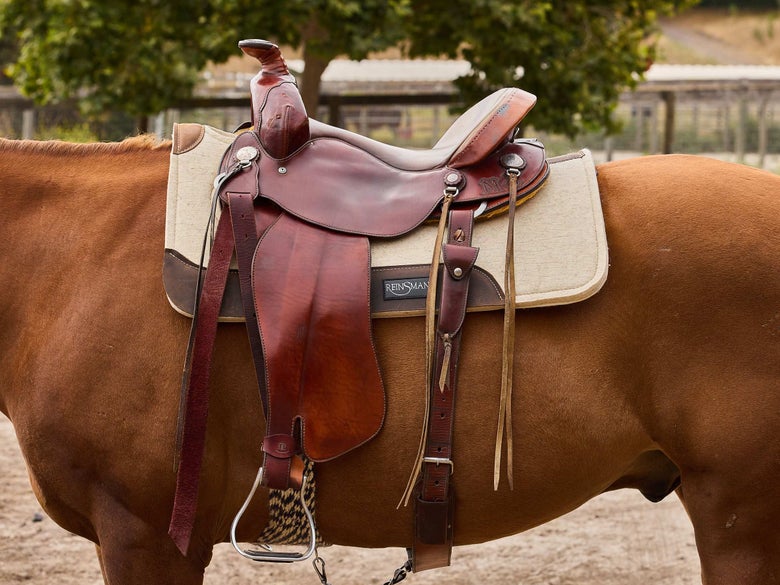
One of the most popular materials in the majority of Western disciplines is wool felt. Known for being extremely breathable and moisture-wicking, wool felt is a top performer in keeping your horse's back cool. Wool also endures repeated pressure better than synthetic pads, effectively offering comfort and compression protection for hard-working horses.
Another advantage of a wool felt pad is the ease of cleaning and air-drying, which can help increase the longevity of the pad. They even come in different styles such as plain felt or with a colorful blanket top, so you can choose a look best suited for your tack ensemble and personal tastes. These pads are great options for performance horses such as barrel horses, rope horses, team penners, cutters, reiners, and trail horses.
| Strengths | Breathable, Moisture-Wicking |
| Weaknesses | Typically Heavier in Weight |
| Use | All Performance Disciplines |
| Care | Wash With Hose, Air Dry |
Fleece
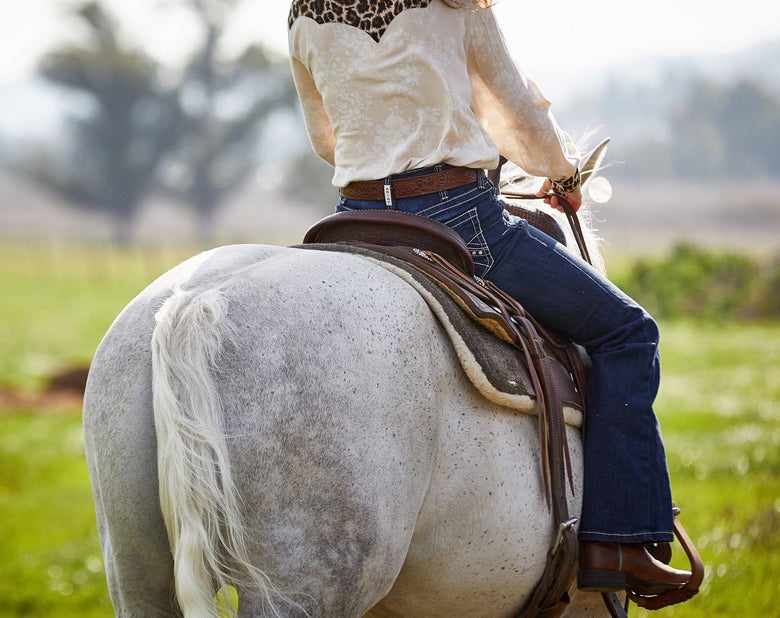
Saddle pads made with synthetic or natural wool fleece are a common and popular choice. A majority of western pads with fleece utilize wool felt on top with a fleece lining on the underside. Fleece effectively creates a soft feel for additional comfort and shock absorption. However, these pads typically do not last as long as felt pads, as the fleece eventually becomes matted down from heavy use and sweat and dirt. Deep cleaning and brushing of the fleece can lengthen the lifespan of the pad.
It is also important to note that fleece can add to the pad's overall thickness, which may be detrimental to certain horse and saddle fit combinations. Fleece-lined pads topped with wool felt are typically more suitable for roping or trail horses, or for horses with narrow backs and high withers.
| Strengths | Soft Feel, Comfortable, Shock-Absorbing |
| Weaknesses | Not as Durable, May Be Too Thick |
| Use | Roping, Trail, Horses with Narrow Backs and High Withers |
| Care | Wash With Hose, Use Specialty Fleece Wash, Air Dry, Brush Fleece to Fluff |
Synthetics
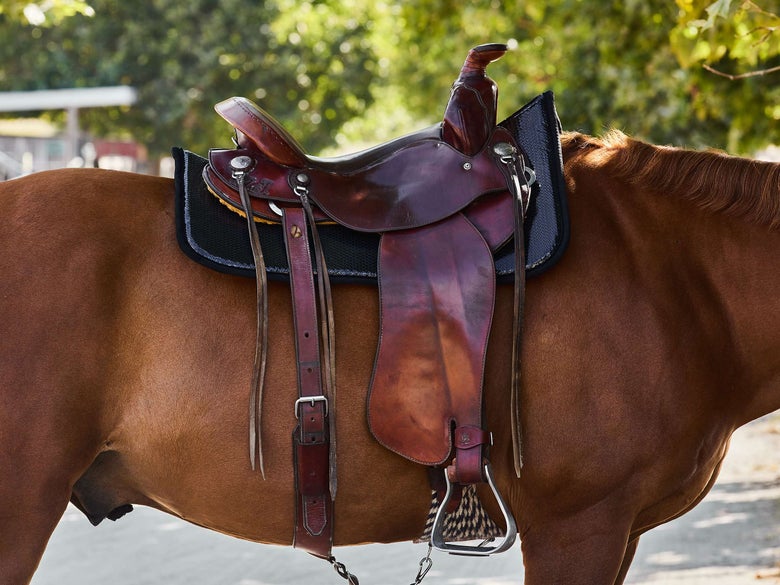
Synthetic pads are typically offered in different materials and styles, such as gel with vent holes or neoprene foam in a waffle-weave style. Overall, synthetic pads are known for their increased grip and easy-to-clean nature. These saddle pads are considered to be less breathable than their natural material counterparts; if you live in a particularly hot and humid climate or have a horse that needs extra airflow, a synthetic-bottomed pad might not be best for you.
Synthetic saddle pads are designed for their shock-absorbing and antifungal properties, plus they are simple to care for. A common synthetic saddle pad design to allow for better airflow is called "waffle weave" or "tacky." This design features many tiny vents that aid in air circulation, helping to keep the horse's back cooler during long rides. One of the main advantages of waffle-weave pads is the non-slip surface, making them a great option for riders who need to address saddle rolling or slipping.
| Strengths | Shock-Absorbing, Easy to Clean, Antibacterial, Non-Slip |
| Weaknesses | Not As Breathable, May Cause Heat Buildup |
| Use | Trail Riding, Training, Prevents Saddle Rolling & Can Help Prevent Slippage |
| Care | Wash With Hose, Air Dry |
Western Saddle Blankets & Liners
These saddle pad accessories add unique flair and useful benefits to the pads you already own! Whether it's dressing up an outfit to make it show-ready or bulking up on gear for an intense ride, there is an addition for everyone.
Saddle Blankets
Western saddle blankets are used over a saddle pad, are made from a thickly woven fabric, and come in a variety of patterns and colors to suit your style. Since they come in a multitude of colors, you can keep a few saddle blankets on hand and one nice saddle pad to easily switch up your look. They are very popular for showing and can even be used as a liner to protect your saddle pad investment.
Saddle Liners
Western saddle liners are placed underneath a saddle pad and used to protect the saddle pad from wear or prevent it from slipping. They have a thin design to limit bulk under the saddle pad and come in a variety of materials. Liners that are made from wool are a good choice for protecting your nice saddle pad from collecting dirt, sweat, and grime— therefore extending its life. Synthetic liners can also absorb sweat and dirt but are typically used to keep the saddle pad from slipping during work.
Frequently Asked Questions
What is the purpose of a Western saddle pad?
Western saddle pads serve as a cushion between the horse's back and the saddle, providing added comfort and protection for both horse and rider.
How do I choose the right Western saddle pad for my horse?
The right Western saddle pad will depend on factors such as your horse's conformation, their level of activity, and the type of riding you do. Consider the thickness and material of the pad, as well as any additional features such as pads with built-in technology or removable shims. It's also important to make sure the pad fits properly and is not too small or too big. To get more of a detailed explanation, be sure to visit our article on How to Choose a Western Saddle Pad.
How often should I replace my Western saddle pad?
The frequency at which you need to replace your western saddle pad will depend on the amount of use and how well it's been cared for. A well-maintained pad can last for several years, but a pad that is used frequently or not cleaned properly will need to be replaced sooner. It's a good idea to check your pad regularly for signs of wear, such as fraying or holes, and replace it if necessary.
Can I wash my Western saddle pad?
Yes, most Western saddle pads can be washed. However, it is important to check the manufacturer's instructions before doing so, as some pads may have specific care instructions. In general, you should use a mild detergent and cool water while avoiding using bleach or fabric softener. For most western saddle pads, it is recommended to allow them to air dry versus going in the dryer. For more information, we highly recommend you take a look at our How to Clean Saddle Pads article!
Closing Thoughts
Whether your game is roping, barrel racing, showing, or trail riding, picking the right saddle pad will help protect your hard-working horse from shock and concussion. We hope that we have helped you understand the importance of choosing the proper saddle pad based on how each variable affects you, your horse, and the saddle fit. Remember that seeing what your horse prefers - and responds well to - can save a lot of your time and energy when you're buying a saddle pad! If you still have questions, please email our helpful customer service team at info@ridingwarehouse.com or call 1-800-620-9145. Happy riding!