How to Properly Dress for the Dressage Arena
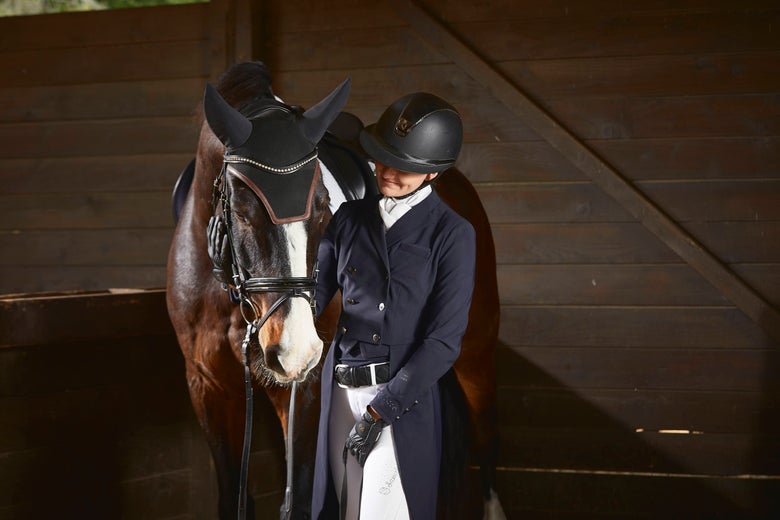
The sport of dressage is known for its blend of movement, precision, artistry, and harmony. In the competition arena, riders are required to demonstrate these elements in the form of a "test," which is a series of movements with each movement being scored by a judge on a scale of 0 to 10. An important component of any dressage test is the rider's competition attire. A rider's presentation can affect not only the judge's impression of you but also what areas of the body their eyes are drawn to during your test. The rider's attire should convey professionalism and respect to the judge while keeping the rider safe and able to perform their best.
To dress appropriately for the competition arena, a rider must follow the guidelines and rules set by the United States Dressage Foundation (specifically DR 120 and DR 121). In this article, we will discuss the dressage rider's proper attire, which includes an approved riding helmet, a show coat, a show shirt, a tie or stock tie, gloves, breeches, and boots. We also had the chance to ask RW sponsored rider, Alex Greer, for some of her pro-tips when it comes to shining in the dressage court! Read on to discover all you need to know to dress for dressage success.
Dressage Attire Requirements
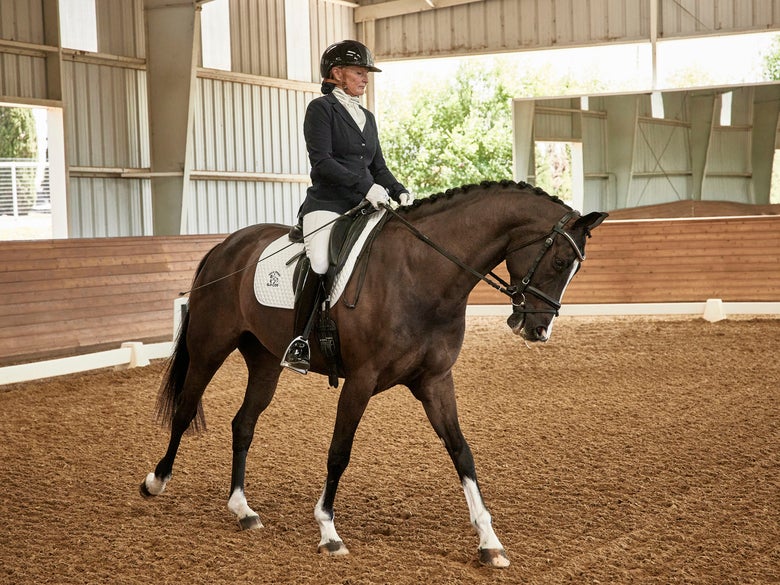
Proper dressage attire is essential for not only looking professional but also for ensuring that you are following USDF attire rules. The last thing you want is to be disqualified for your clothing! Below are the items you need to enter the show ring:
Approved Riding Helmet
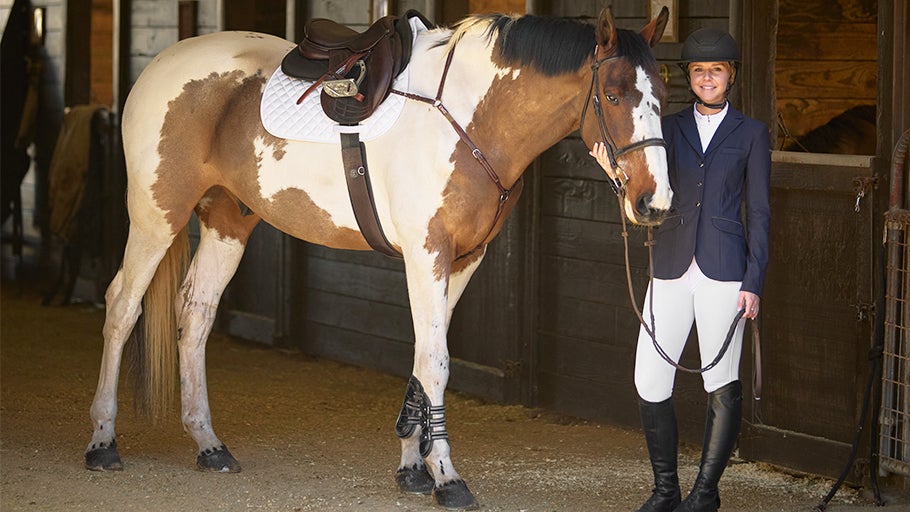
All riders mounted on the showgrounds must wear a riding helmet that meets or exceeds ASTM (American Society for Testing and Materials) / SEI (Safety Equipment Institute) standards for equestrian use. The helmet should fit the rider well with the chin strap snug yet comfortable. The helmet can match or coordinate with the rider's jacket color and can feature contrast-colored areas and crystal details. For more information on helmet fit or helmet safety standards, check out our Riding Helmet Education Center.
Pro-Tip
Though they are not required, safety vests and inflatable vests intended for use in equestrian sports are allowed at any level of competition.
Hairnet/Bun
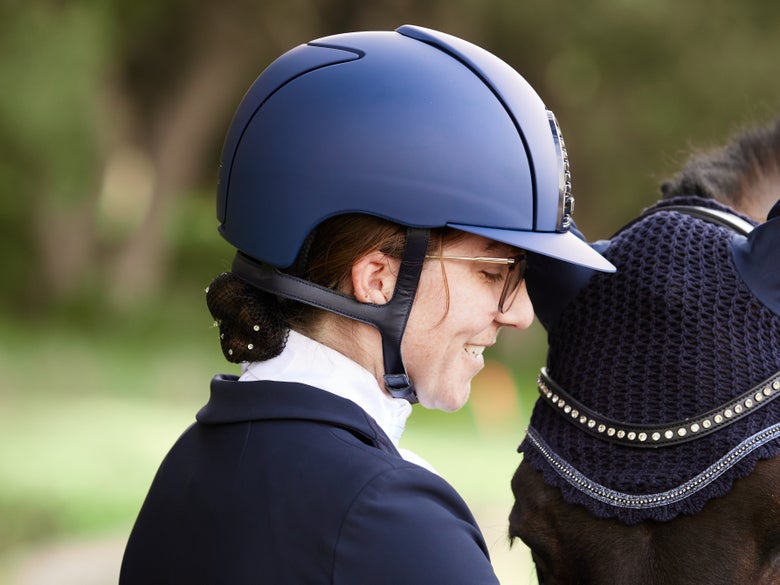
Hair should be worn up inside the helmet or in a neat bun outside the helmet. Riders who choose to wear their hair inside a helmet should ensure that the addition of their hair does not alter the fit of the helmet. Hair worn in a bun should be covered in a hairnet or special bun net (subtle decorations on bun nets are allowed). Hairnets should also be used by riders who wear their hair under helmets to contain fly-aways. Fly-aways from underneath the helmet or from a bun are considered untidy and poor turnout. Riders with very short hairstyles may not require hairnets. Hair should not be worn in long braids or ponytails.
Show Shirt
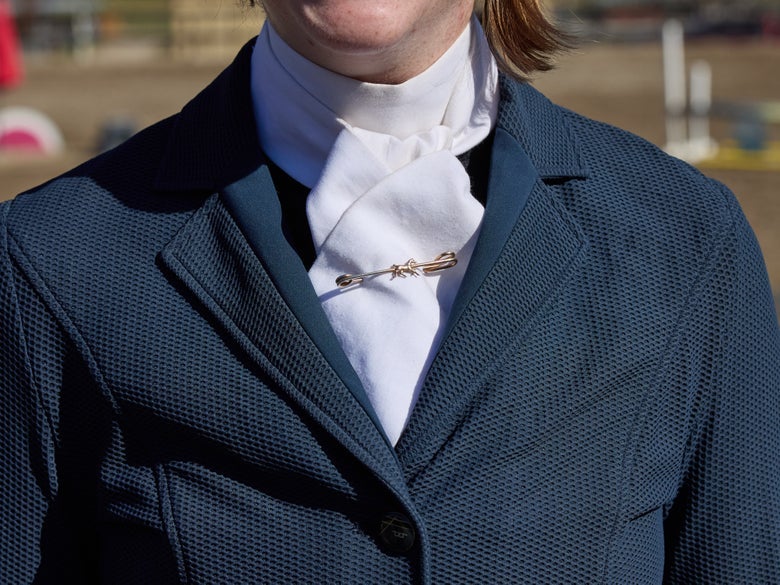
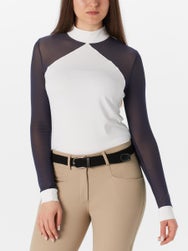
Show shirts should fit the rider well, be tucked into breeches, and be worn under a show coat. Any color or pattern is allowed to be worn under a coat. When coats are called, any colored shirt is permitted as long as it has sleeves and a collar. This is the area where riders have the most choice. Riders wearing a mesh coat may want to wear a dark-colored shirt to match the coat color in order to keep the shirt from showing through the mesh.
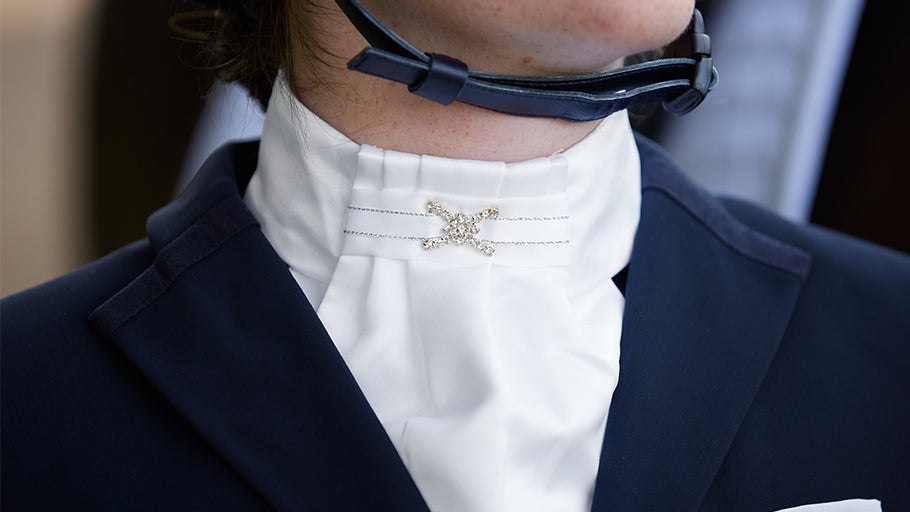
Shirts with necktie, choker/ratcatcher, stock tie, or integrated stand-up collar are required. Ties, chokers, or stock ties may be any color or pattern. Shirts with exposed zipper-style collars should use a tie or stock tie, but are not required to. If the neckwear is removable and coats are called due to heat, the neckwear must be removed.
Show Coat
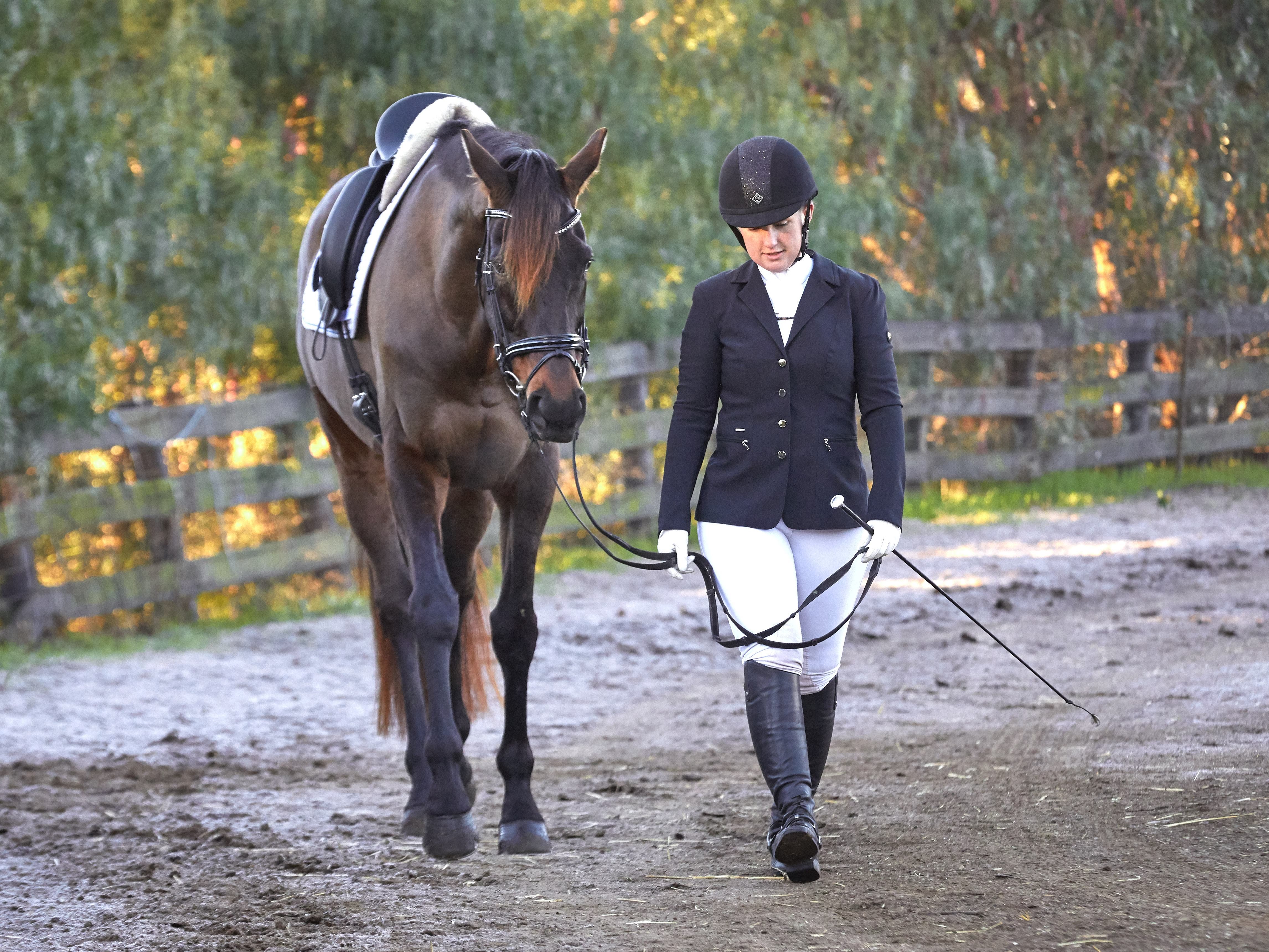
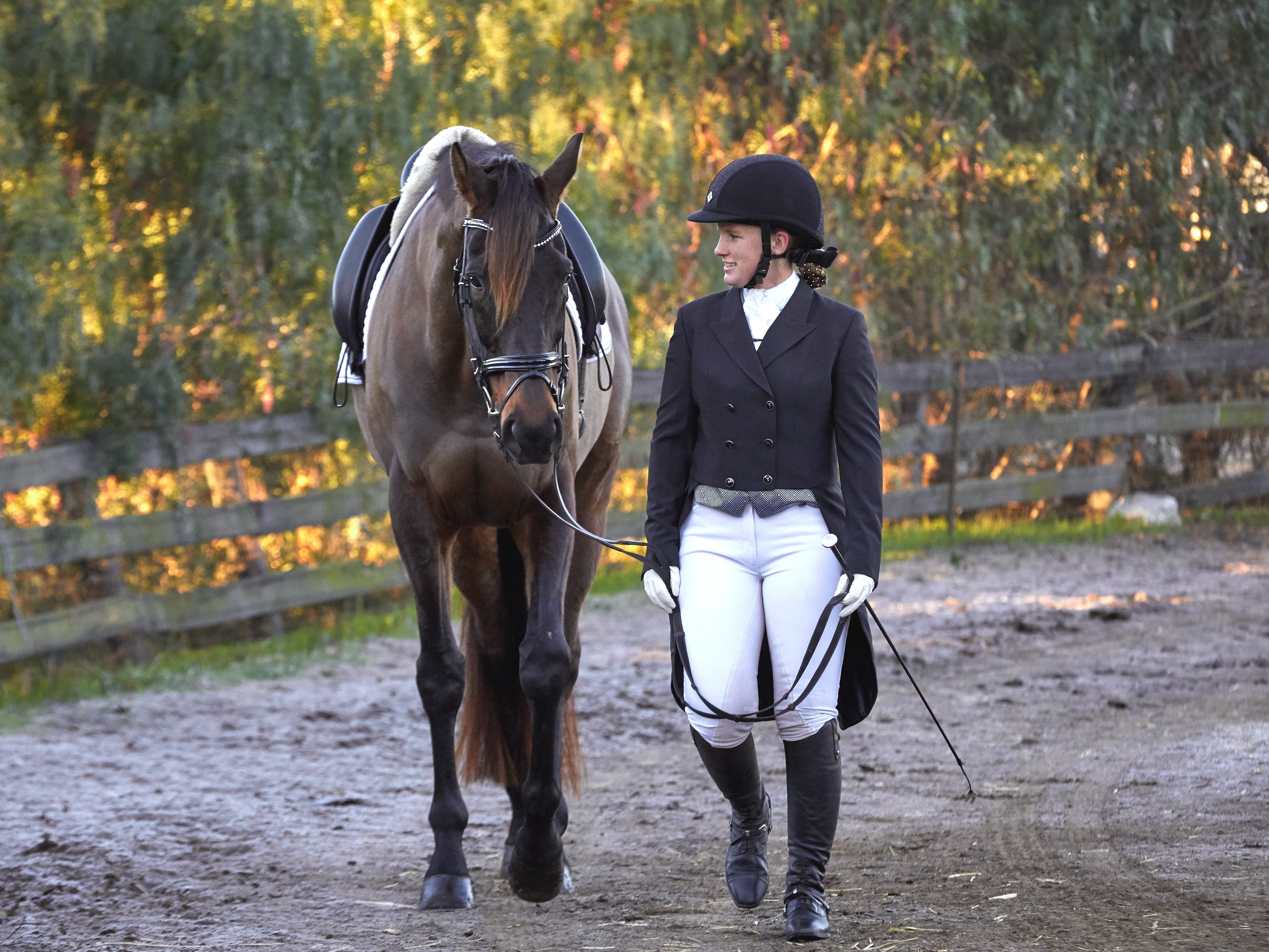
Riders can wear a short coat or modified tailcoat at any level, while a tailcoat/shadbelly is permitted above Fourth Level. Traditionally, dressage short coats have four buttons, though three-button coats are completely acceptable and seen frequently. Coats can be any solid color or have a subtle pattern, such as pin striping, checks, plaids, or tweed.
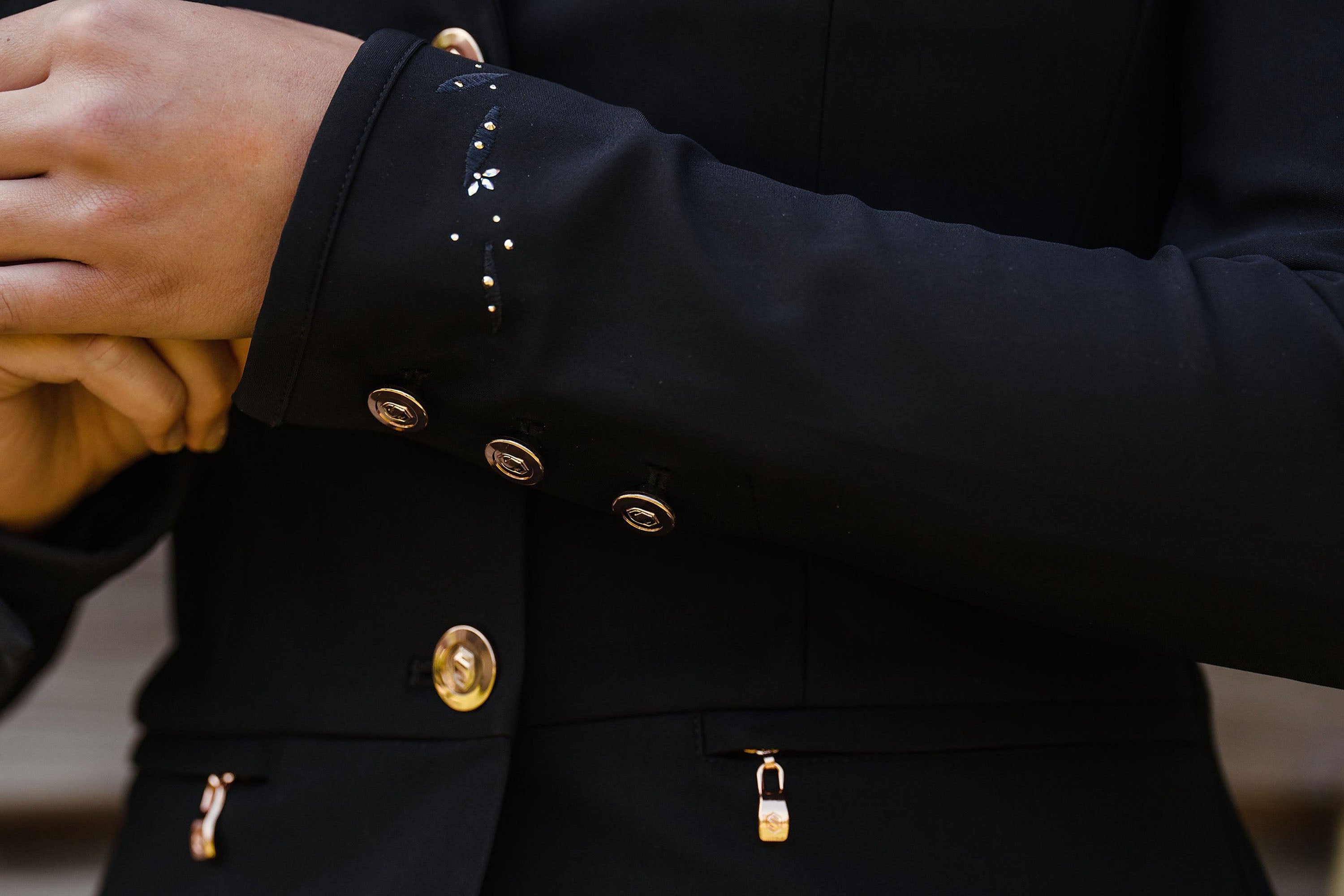
Tasteful and discreet accents are allowed, if the rider chooses. Accents can include a collar of a different hue, modest piping, or crystal decorations; accents should not be distracting to the judge. The coat should be comfortable and fit the rider well, similar to a tailored business suit. To perform your best, look for materials that allow freedom of movement and breathability.
To see a few of our favorite show coats, check out the Best Horse Show Coats Buying Guide!
Pro-Tip
If riders are in or retired from the armed forces or police forces, they may show in their uniform of service. Regardless of uniform, riders must wear a compliant helmet.
Show Breeches
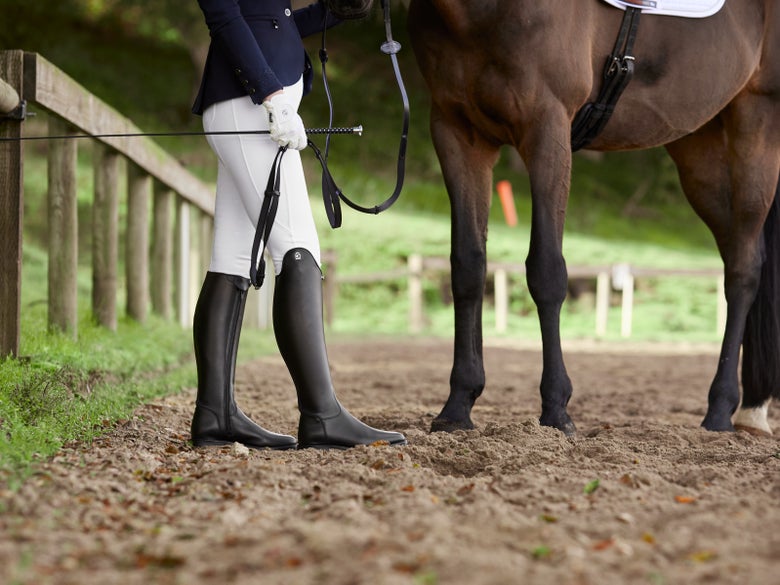
Traditionally, dressage riders were only allowed to wear white, off-white, or tan breeches in competition. The new attire rules now permit solid white, light, or dark breeches in competition as well. Bright colors, color blocking, or patterns are still not allowed, though contrast piping and grip are allowed. For example, if you had white breeches with a gray suede full seat, it would not be considered color blocking and would be allowed in the ring.
It is most traditional to wear white breeches or off-white breeches. Breeches should be well-fitting, clean, and wrinkle-free during competition.
Pro-Tip
Young riders competing Fourth Level and below are allowed to wear jodhpur breeches with garters and paddock/jodhpur boots.
Riding Boots
Riders competing at Fourth Level and below may wear tall boots or paddock boots with matching leather half-chaps. Tall boots are the most common from First Level and up; however, they are required above Fourth Level. Tall boots can be dress, field, or dressage boots with front or back zippers. They can coordinate with the color of the rider's outfit and have colored accents. Boots must be made of leather or leather-like materials, have a distinguishable heel, and be clean. To avoid unnecessary pain that may also hurt your performance, make sure your boots are broken in before show day. If you're new to the tall boot game, check out our favorites in the Best Tall Boots Buying Guide or read our Tall Boot Size & Fit Guide so you order the right size!
English-style spurs are permitted and must be made of metal materials only, though rubber-covered arms and plastic knobs on the shank are permitted. The shank may be curved down or straight, and rowels may be blunt or smooth, as must the arm of the spur on the side that touches the horse. "Dummy spurs" (those without a shank), armless spurs, and swan-neck spurs are also acceptable in the dressage arena.
Gloves
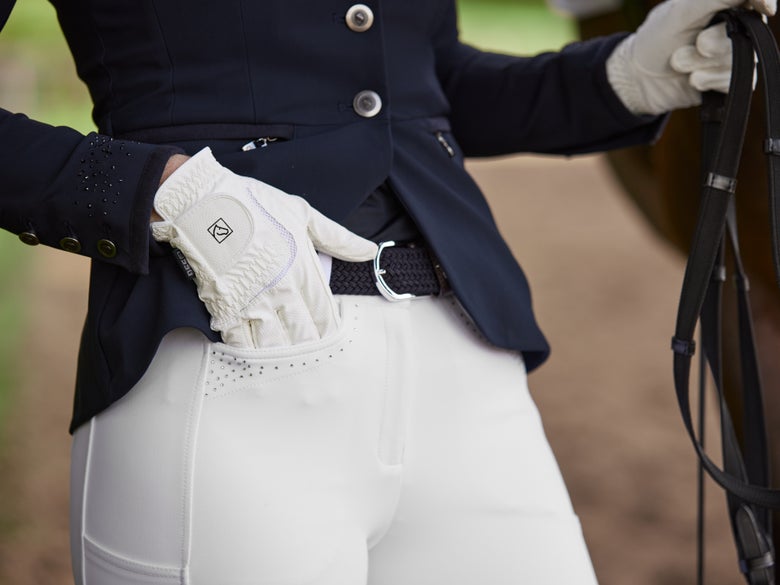
Any color gloves are allowed from Intro to Fourth level, though USDF recommends white or light-colored gloves to allow the judge to see the rider's hands better. Dark gloves can be a good choice for riders still developing steady hands, but some judges may see this as a way of hiding something. It's best to move to colored gloves between training and First Level. At the FEI levels, gloves are required and must be the same color as your show coat, white, or off-white. Most riders in the FEI levels choose to use white gloves. Ensure your gloves fit well and are free from dust or dirt.
Overview of Dressage Attire Rules
Now that we've covered what attire is required in the dressage arena, here is a helpful reference table that covers your outfit from head to toe! If you are ever in doubt about whether you or your horse's dress and saddlery are show legal, you can always ask the show's technical delegate (TD) for clarification or just err on the side of caution.
| Type of Attire | Allowed | Not Allowed |
| Helmet |
|
|
| Shirts |
|
|
| Vests |
|
|
| Coat |
|
|
| Gloves |
|
|
| Breeches |
|
|
| Boots |
|
|
| Spurs |
|
|
| Military & Police |
|
|
Pro-Tips from Sponsored Rider Alex Greer
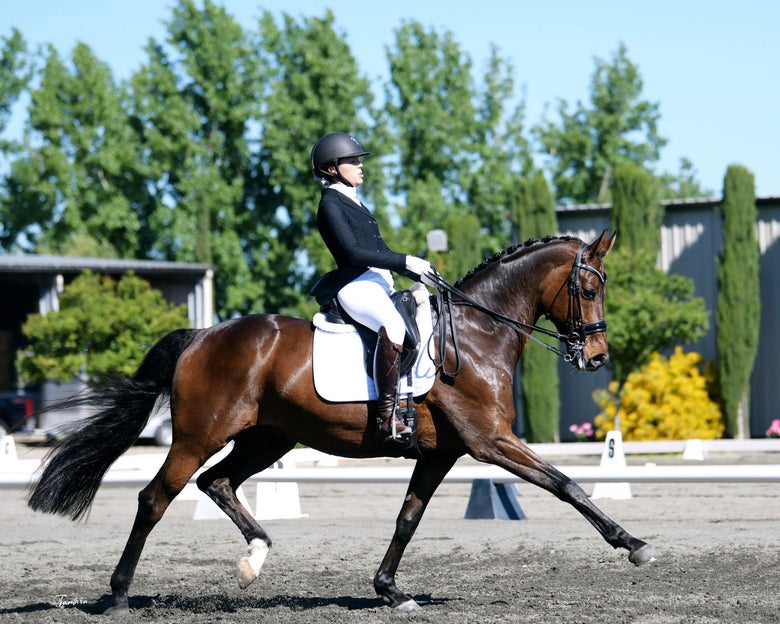
One of the fun aspects of dressage is the amount of personal expression you can have with your competition attire. That said, finding the look that represents who you are while only adding positive attention to your performance can be a challenge. So, we asked RW sponsored rider Alex Greer for her insights on how she chooses her show arena looks so you can find inspiration for yours! No matter the level she is competing, RW sponsored rider Alex Greer is always a style icon in the ring, and knows a thing or two about putting your best boot forward for dressage court success.
Learn more about Alex Greer and her equestrian journey in her Q & A in our Learning Center!
What is your process for putting together a show look?
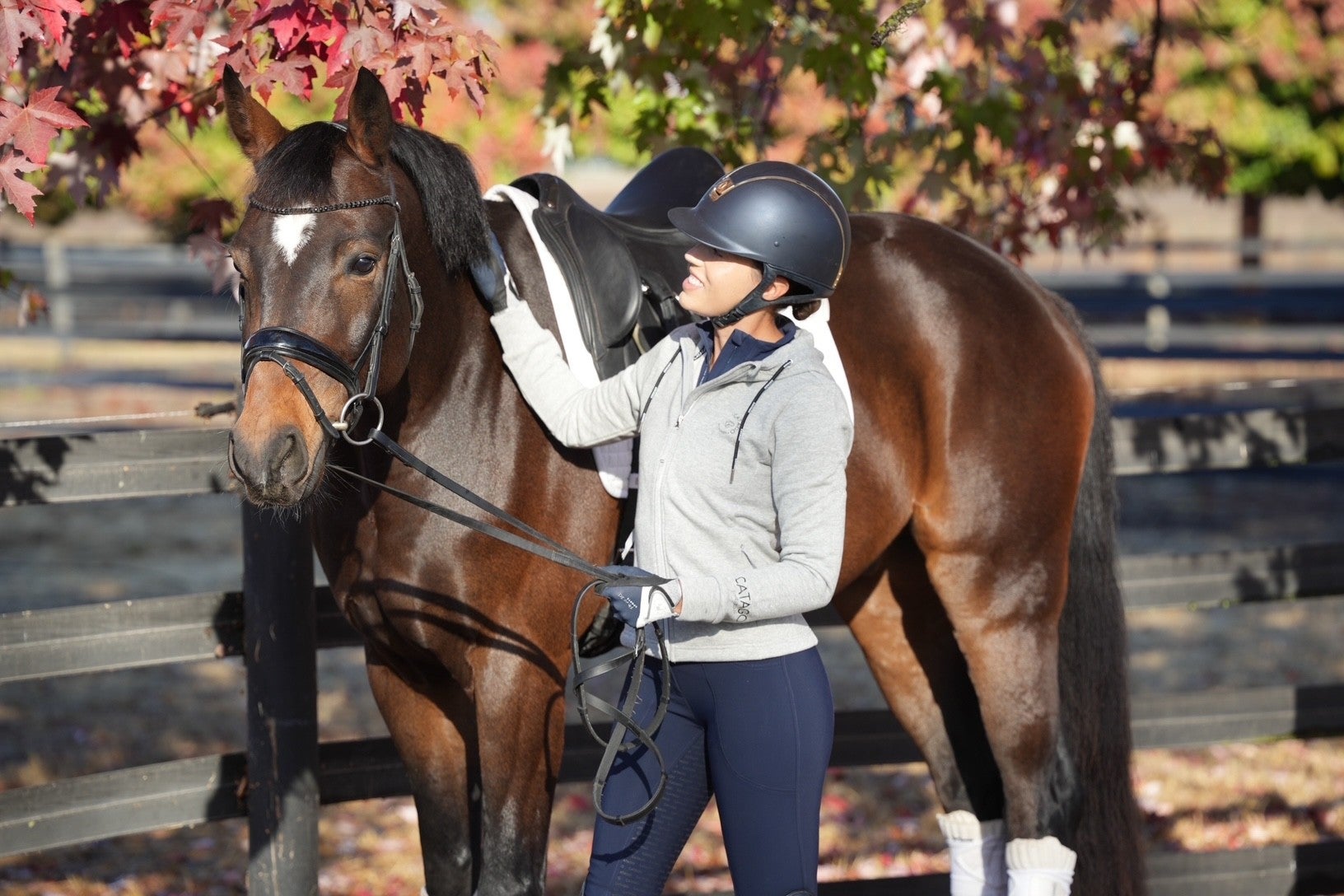
When planning my look, I consider the level of competition, the horse's color, and their current tack. For instance, at a horse show I recently competed in, I showed a client's palomino Swedish Warmblood at Training Level. I knew I needed to wear a short coat, and out of the short coats that I have, I decided that chocolate brown looked very nice on her. I wore the brown show jacket with patent chocolate gloss riding boots and a brown Samshield helmet. My client brought a pair of canary yellow diamond earrings for me to borrow that matched the stones on my boots perfectly. That was the ultimate matchy-matchy moment! The mare's saddle and snaffle bridle are black, and she wore a black LeMieux bonnet.
The other horse I've shown PSG, I1, and I1 freestyle is a bay Hanoverian. I like to keep things a bit more traditional with him, so I wear a black tailcoat with black patent riding boots. His saddle and double bridle are both black. When I designed my Samshield helmet with Riding Warehouse, I added silver crystal fabric to the "blazon" of the helmet to match the silver crystal glitter on the cantle of my saddle. This, to me, is just the right amount of bling!
I only wear Kastel Denmark shirts under my show jackets and usually wear white, but sometimes I will wear black or navy.
When selecting show breeches, what are the most important factors for you?
When I choose a breech for dressage, I choose one that is high-waisted, especially so my tailcoat shows more of my belt and front waist since the coat is cut shorter in front. I typically wear Samshield Clara or Claranova full-seat breeches for competition because they have just the right amount of compression and stretch for me. Most importantly, I want to make sure my breeches have zero transparency because I often spend the entire day in my whites as I coach my students before and after I compete.
When selecting show coats, what are the most important factors for you?
I really like breathability and a second-skin feel with my coats. Riders are athletes, and I think a show coat should support the athleticism and demands of our sport. Coats like the AA Horseware Motionlite Coat are super in the summer heat, but honestly, I wear a mesh coat even in the winter. I love the lightweight feel of the Motionlite, and it isn't see-through with a show shirt under, like some other mesh jackets are.
When selecting saddle pads and bonnets for shows, what are the most important factors in this decision for you?
The ear bonnet fit is really important because it can cause the bridle to slip off if it does not fit correctly. You need to make sure there is room for the ears and that the back part of the bonnet fits far enough behind the crownpiece of the bridle to avoid it pulling the bridle forward or creating a slippery effect over the horse's ears.
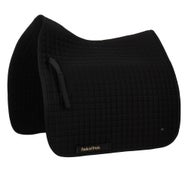
Personally, I like a plain white saddle pad for competition. I wouldn't change the brand or style of the pad your horse goes best in just for competition. Find what your horse likes, then buy a few of that same pad in white for showing. If you use a half pad, purchase a white or natural version for competition. Riding Warehouse has a lot of great options! I also use a black leather show number holder with crystals that I pin to my saddle pad for a clean look.
Do you consider yourself more traditional or trendy, and why?
I think I'm a mix. I like to add a bit of glitter and bling, but only as an accent. My goal is to showcase the horse, so that's where I want the focus to be.
Are there any pieces that are a must-have for any show look?
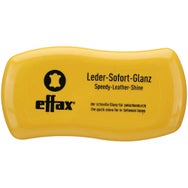
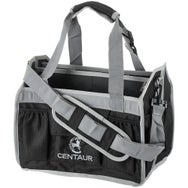
My students and I always have the Effax Speedy-Leather Boot Shine Sponge in our ringside bags for a quick post-warm-up touch-up before going down centerline. It works great on patent! Speaking of ringside bags, the Centaur Essential Large Grooming Tote Bag is my favorite ringside bag to keep things organized.
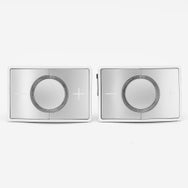
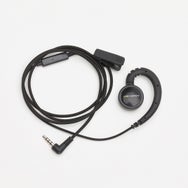
I coach using a CeeCoach 2 Duo Communication System, and with the new rules regarding mono headsets, all of my students use the CeeCoach Over-The-Ear Mono Headset combined with the windscreen.
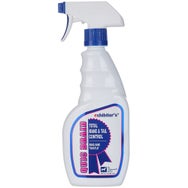
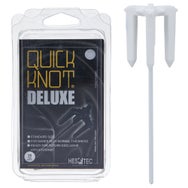
Alex Greer's Favorite Products
Closing Thoughts

Finding your unique show look may not be easy, but it should be fun! Feeling and looking good as you head down centerline can truly elevate your performance. Confidence is key in anything, and having the right outfit can give you that boost to perform your best. Experiment to find what you like and dislike!
Mixing up your show look doesn't have to be expensive either. Items like stock ties, stock tie pins, hair bun nets or scrunchies, and saddle pads can give you a whole new look without breaking the bank. With USDF branching out into the color wheel, you can choose to add a splash of color or make your own splash with a look that feels the most you.
If you are looking for more assistance, please feel free to reach out to our helpful customer service at info@ridingwarehouse.com or 1-800-620-9145. Happy riding!