Fly Control
How to Choose the Best Fly Mask
Keeping irritating flies and mosquitoes off our horses can be a challenge during the hot, muggy months of fly season. Adding a fly sheet is an easy way to help protect your horse from pesky insects while offering additional benefits like UV protection, breathability, and durability.
With so many options on the market, choosing the right fly sheet for your horse and environment can feel overwhelming. That’s why we’ve put together this comprehensive guide covering key features, different fly sheet styles, and the best applications for each. We evaluated a wide range of fly sheets to bring you our top picks of the season, while also noting important considerations to help you shop with confidence. Browse our favorites below to narrow down the perfect fly sheet for both you and your horse.
Choosing the right fly sheet starts with understanding your horse’s individual needs. As you shop, consider a few key factors:
Answering these questions can help determine what type of fly sheet will best suit your horse’s needs. Whether your priority is breathability, durability, UV protection, or maximum coverage, identifying your must-haves is a great way to start narrowing your search. Shop our top picks in each fly sheet category below.
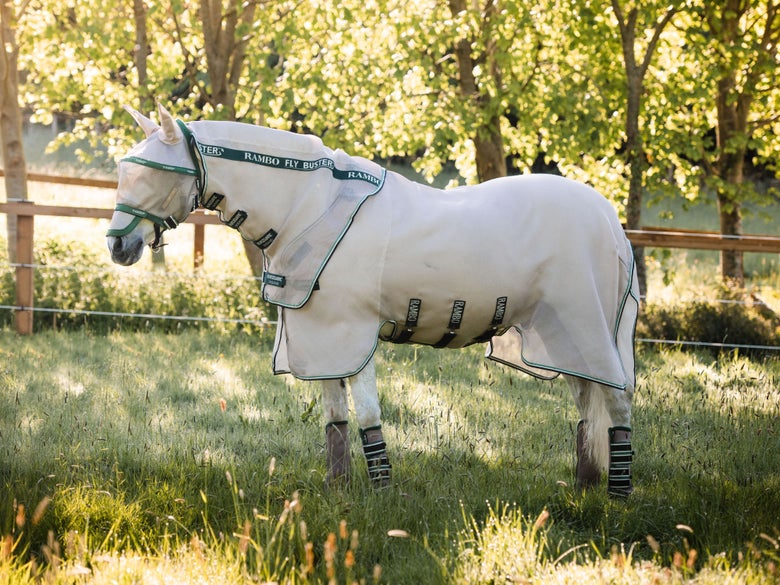
Horseware Rambo Flybuster Fly Sheet with "No-Fly-Zone"
Constructed with a highly durable ballistic nylon outer layer, the Horseware Rambo Flybuster Fly Sheet is our top choice for horses who are hard on their clothing. This resilient sheet allows horses to play and roughhouse to their heart's content while 65% UV protection and breathable mesh keep them protected in comfort.
What really sets the Flybuster apart is Horseware's exclusive No-Fly-Zone™ technology. By binding permethrin into the fibers of the sheet, this technology creates a safe and durable fabric that is effective in deterring flies, mosquitoes, ticks, and a variety of other pesky bugs. The Rambo Flybuster is finished with a removable neck piece and features extended belly coverage, so you can be sure that your horse is shielded from the bugs all season long.
| Pros: | Cons: |
|
|
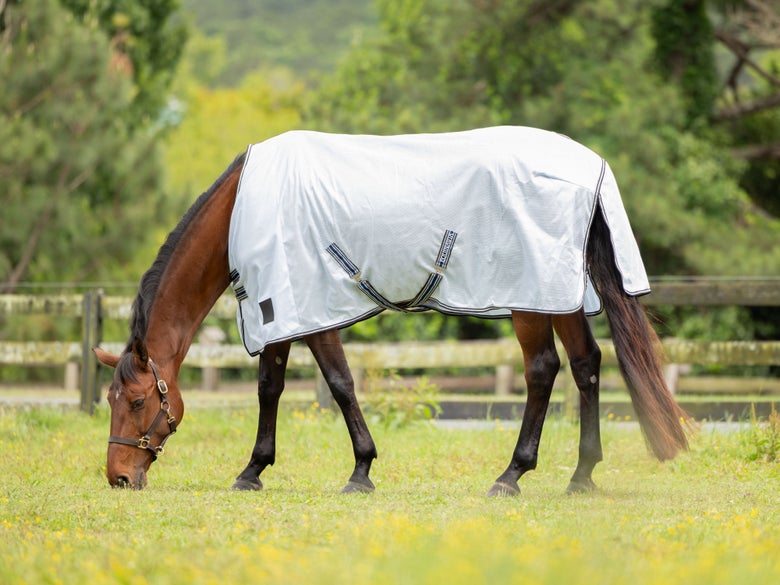
Equinavia Gard Durable Nylon Fly Sheet
A good fly sheet doesn't necessarily have to break the bank! We picked the Equinavia Gard Fly Sheet as the top choice for riders on a budget. Despite its low price, it provides reliable fly protection to our equine friends. With a standard neck design and soft, breathable material, this sheet is highly effective at keeping the bugs away while offering coverage from the sun with UPF 45. Finished with nickel-plated front surcingles, belly surcingles, and adjustable leg straps to keep it in place, the Equinavia Gard Fly Sheet provides an impressive bang for your buck!
| Pros: | Cons: |
|
|
LeMieux Gladiator Fly Rug Sheet
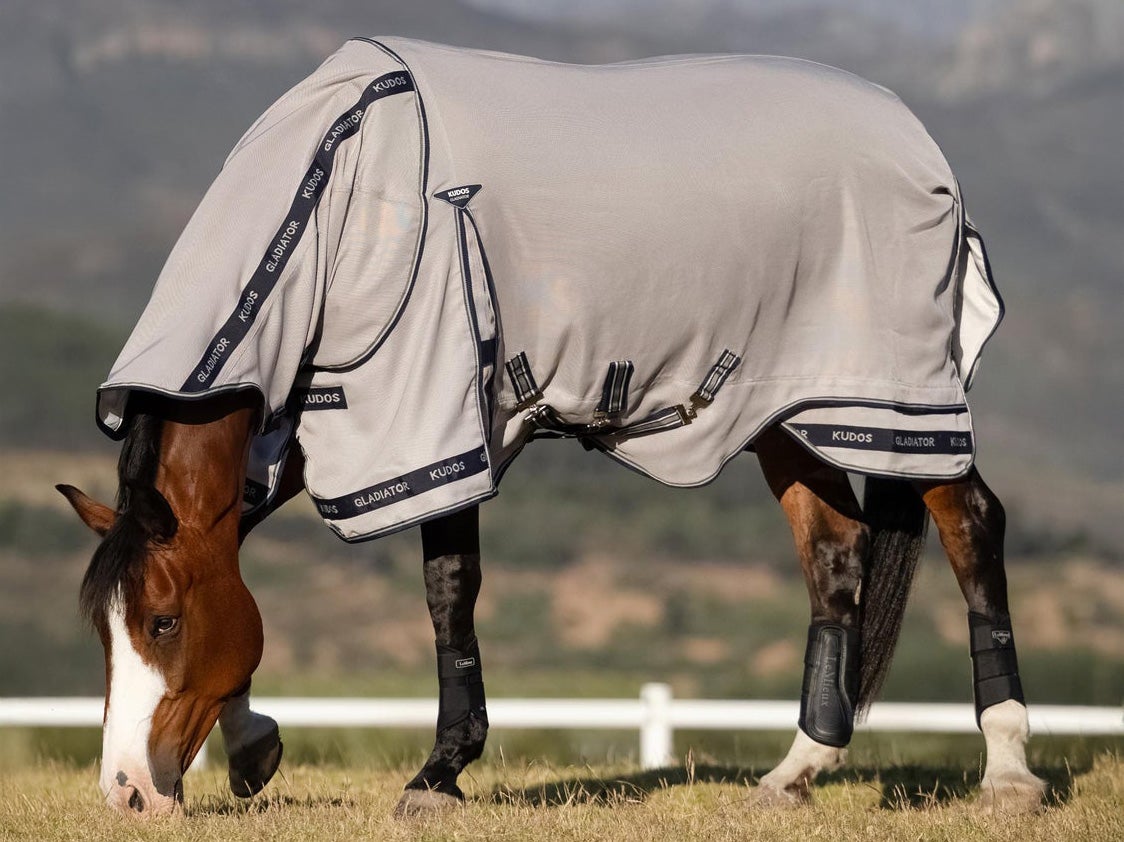
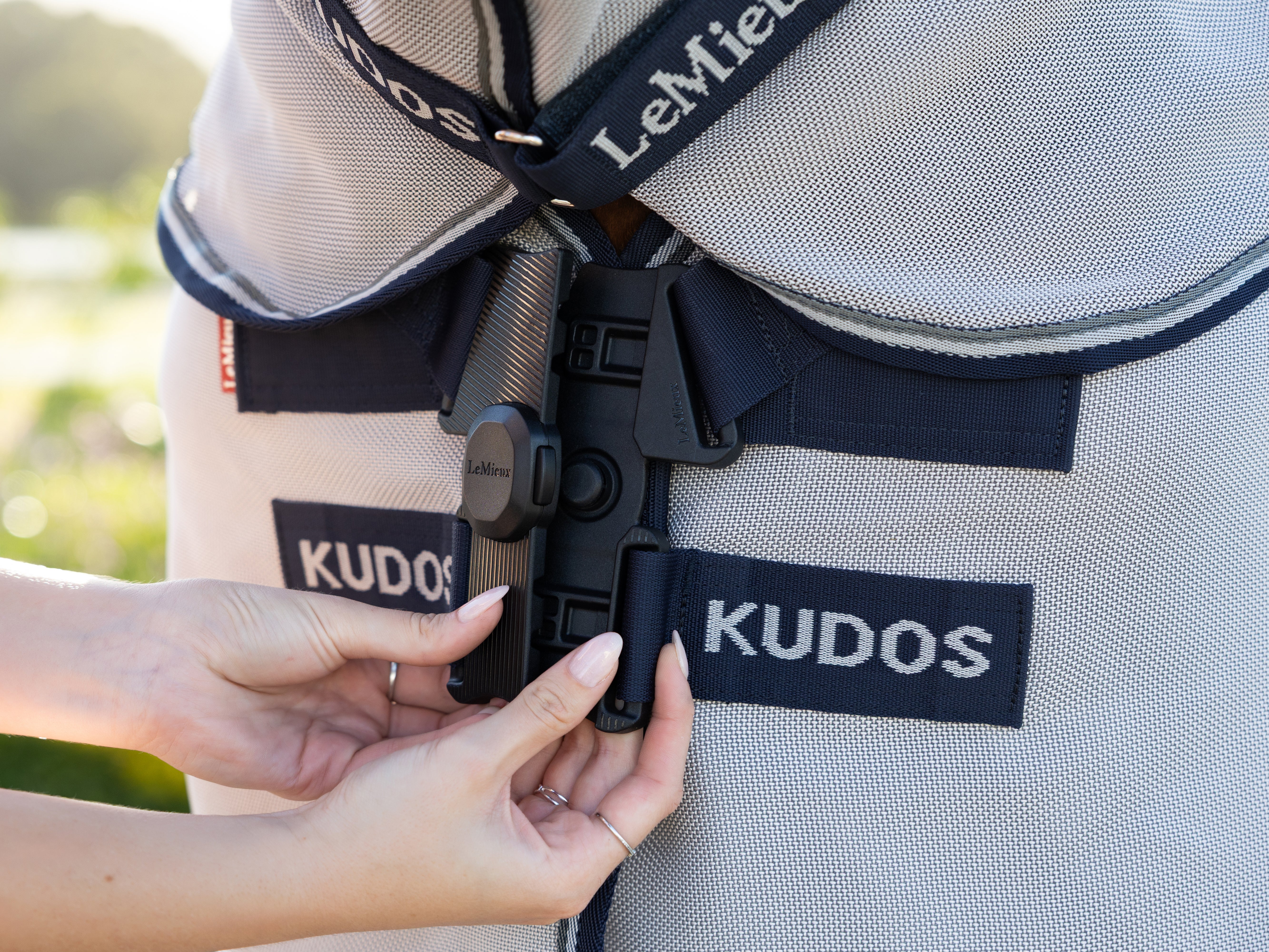
When it came time to select the most innovative fly sheet of the season, choosing the LeMieux Gladiator Fly Sheet was an easy decision. This standout sheet features a two-part skirt system for unrestricted movement and is crafted from breathable, self-healing UV-protective mesh to keep horses comfortable in turnout. Setting the Gladiator apart even further, LeMieux incorporated a military-grade magnetic NeoLock front closure into its unique 45-degree angled design for secure, easy fastening. Say goodbye to fumbling with traditional buckles prone to wear or breakage! This innovative closure offers a fresh approach to securing your horse’s fly season armor.
| Pros: | Cons: |
|
|
WeatherBeeta ComFiTec Airflow Combo Neck Fly Sheet
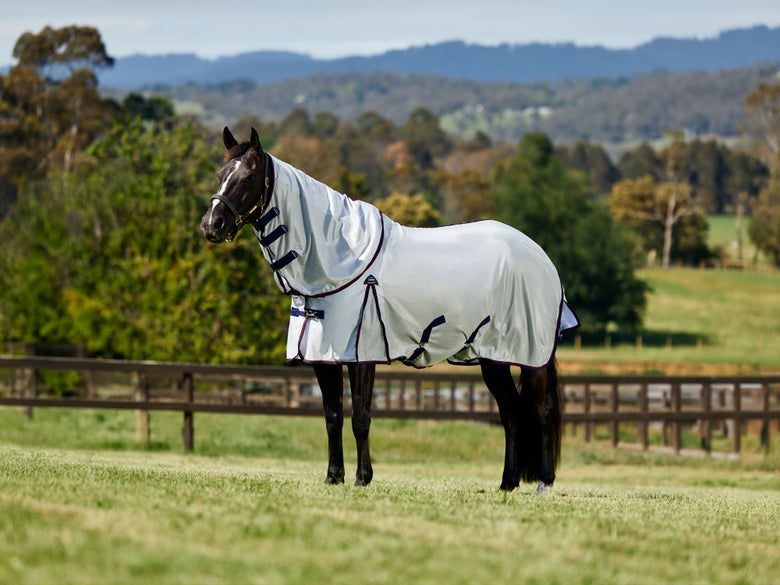
For hot temperatures, we recommend the WeatherBeeta ComFiTec Airflow Sheet to keep your equine cool and comfortable. The soft, durable open-weave mesh allows air to pass through freely to prevent overheating and provides 75% UV-blocking protection. A full coverage neck and large tail flap provide maximum coverage alongside a belly band, helping protect your horse against both bugs and the sun. Complete with 210T lining at the shoulder, mane, and tail flap for added comfort, your horse won't sweat the warm weather or bugs in this ultra-breathable no-fly zone!
| Pros: | Cons: |
|
|
Kool Coat Classic III Combo Neck Fly Sheet
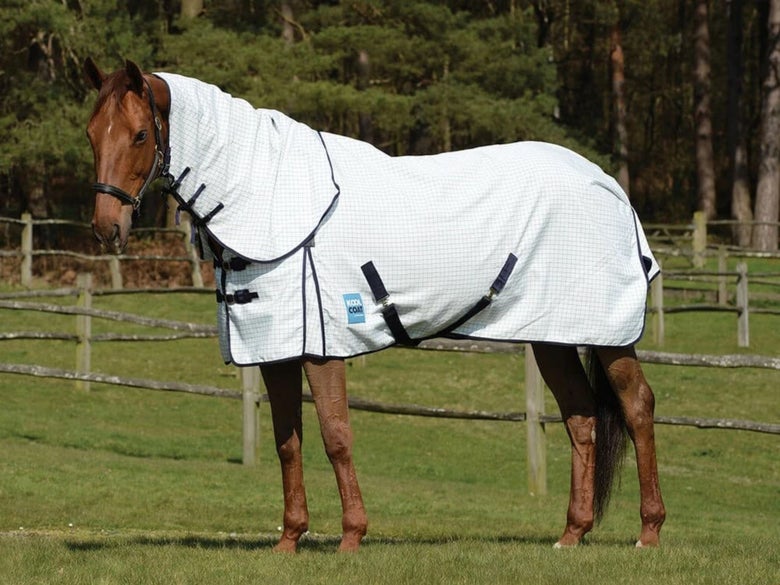
Selecting the Kool Coat Classic III Sheet as our pick for the best UV protection was a no-brainer. This hardworking sheet blocks up to 90% of UV rays, helping protect against sunburn and reduce sun bleaching during the warmer months. Ideal for sensitive-skinned horses, it features a durable 270g polyester outer built to last, while the detachable neck adds versatile coverage options.
| Pros: | Cons: |
|
|
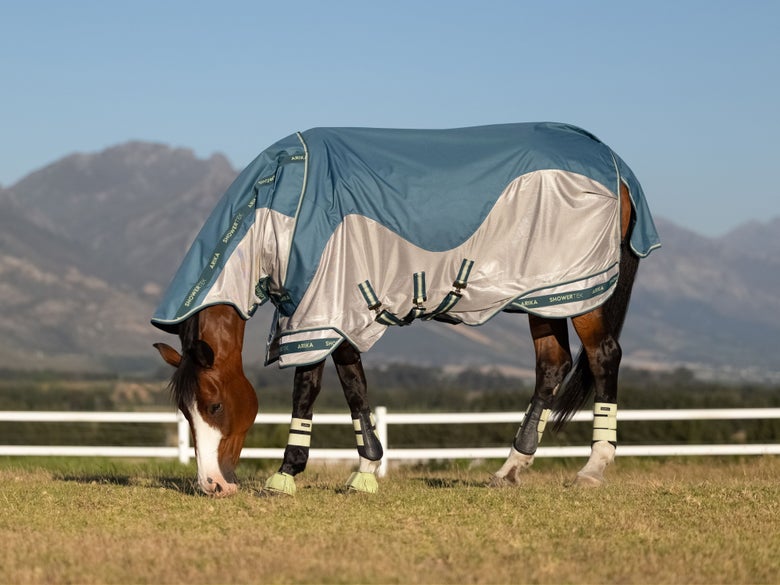
LeMieux Arika Camo Shower-Tek Fly Sheet
The Arika Camo Shower-Tek Fly Sheet has your horse covered when spring and summer rain showers roll in. Offering protection from the poll back, this innovative sheet combines lightweight mesh with a waterproof upper panel to help keep your horse dry and cool. Crafted from durable 600D diamond ripstop, the waterproof top layer stands up to pasture antics, while an 85% UV protection rating helps shield against harmful rays.
We especially appreciate LeMieux’s 45-degree angled T-bar front closure, designed to reduce shoulder pressure and allow horses to move comfortably in turnout. For added versatility, the neck cover can be easily detached on days when extra coverage isn’t needed. Ideal for horses living in regions where surprise showers are common, the Arika Shower-Tek is a standout choice for horses facing unpredictable weather.
| Pros: | Cons: |
|
|
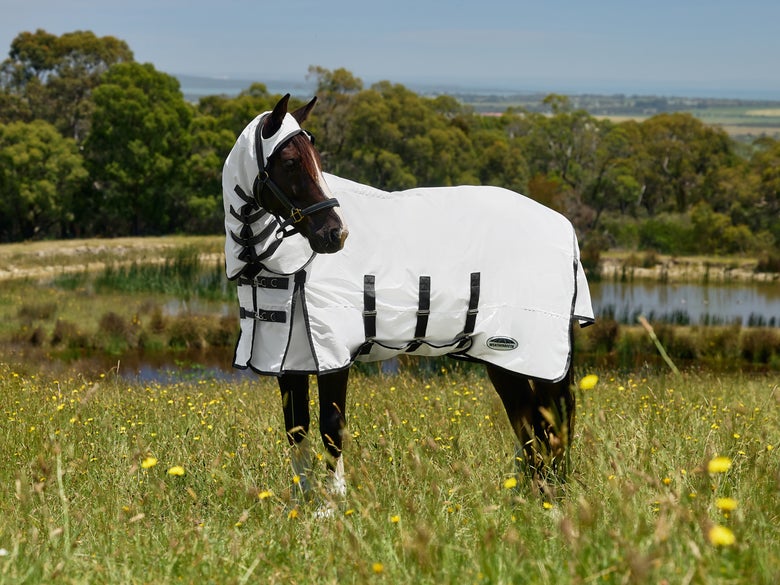
WeatherBeeta ComFiTec Sweet Itch Shield Combo Fly Sheet
The WeatherBeeta ComFiTec Sweet Itch Fly Sheet is the perfect solution for sensitive horses in need of maximum protection. A neck cover complete with ear holes and mane lining provides extended front-end coverage, while a full tail wrap and adjustable belly wrap help shield the areas most prone to sweet itch irritation.
Thoughtful design details, including extra wither padding to relieve pressure and shoulder gussets for freedom of movement, keep horses comfortable in turnout. Built for horses that love to play, graze, and roam, this full-coverage fly sheet helps horses (and their owners) enjoy the warm summer months with less worry about irritation and more confidence in complete protection.
| Pros: | Cons: |
|
|
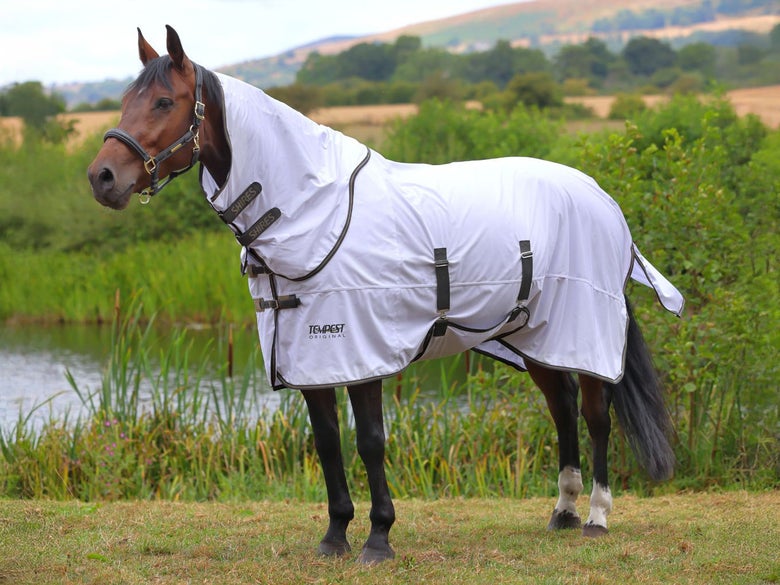
Shires Tempest Original Fly Sheet With Detachable Neck
We chose the Shires Tempest Fly Sheet as our top pick for small equines thanks to its feature-packed design. With a detachable neck cover, protective belly coverage, and an extended tail flap, this sheet offers impressive full-body protection from pesky bugs.
The tightly woven mesh not only creates a barrier against biting pests but also helps prevent sun bleaching during the warmer months. To top it off, soft lining at the chest and along the seams helps prevent rubbing, so your pony can graze, play, and explore in reliable comfort. Available in large and small/medium pony sizes, the Tempest is a standout choice for the little equines in your barn.
| Pros: | Cons: |
|
|
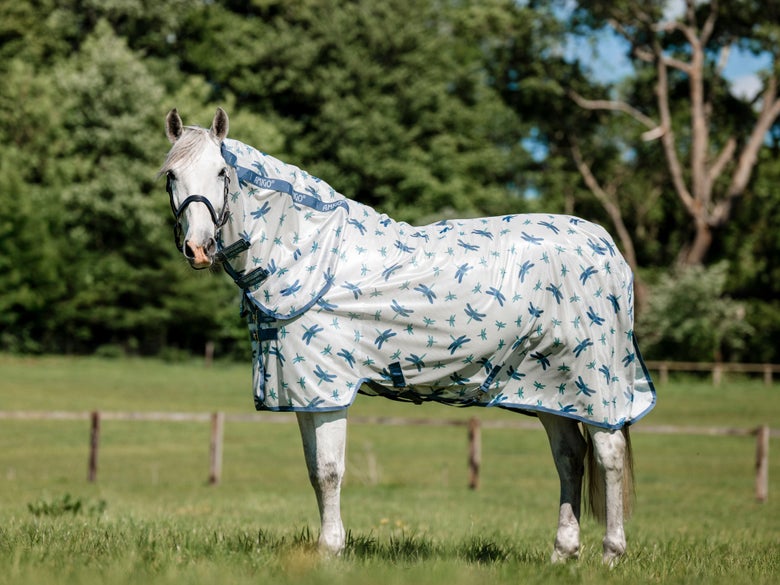
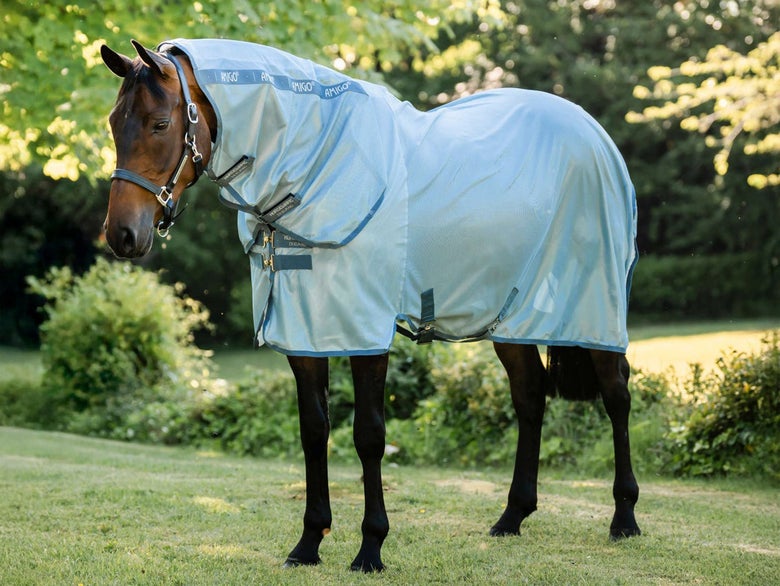
Horseware Amigo Integrated Fly Sheet
It’s easy to see why the Horseware Integrated Fly Sheet earned our pick for best pattern of the year. Featuring a fun, spring-inspired dragonfly print, this standout sheet brings style to the pasture, but it’s far more than just a pretty pattern. Adjustable belly surcingles, an integrated neck cover, and a wide tail flap provide extended coverage to help keep your horse protected from bothersome bugs.
Saving one of the best features for last, this sheet also offers 65% UV protection to help shield against the sun’s rays. While your barn mates (and your horse’s pasture pals) admire the eye-catching print, your horse will be enjoying a fly sheet that truly has it all.
| Pros: | Cons: |
|
|
Choosing a fly sheet can be a challenging task because some desirable features don’t always go hand in hand. For example, finding a sheet that is both exceptionally durable and highly breathable can be difficult, so it’s important to consider where you’re willing to compromise. Using that same example, you may prioritize maximum breathability and be comfortable replacing a fly sheet more frequently.
Read on for some of the key factors to consider when narrowing your options:
Coverage:
Horses often require different levels of coverage. If your horse is mainly bothered by larger insects and flies, and you want to help reduce stomping and irritation during turnout, a lower-coverage option may be sufficient. However, horses with sweet itch or insect-related sensitivities may benefit from higher-coverage designs with neck covers, belly bands, and extended leg protection.
Breathability:
Your climate and how your horse handles heat are major factors in determining how breathable a fly sheet should be. Some horses naturally seek shade and tolerate warm weather well, while others are more prone to overheating. Knowing your horse’s habits can help ensure you choose the right level of airflow and comfort.
Durability:
Some horses love to test their blankets, while others are much gentler on their gear. If your horse is notorious for damaging sheets, a heavier-duty fly sheet may be worth prioritizing.
UV Protection:
UV protection has become a major consideration for many horse owners, and most fly sheets offer some level of sun defense. If your horse is prone to sunburn or you’re looking to prevent coat bleaching for showing season, consider a sheet with 70% or greater UV protection.
Budget:
Budget is always part of the equation. We made it a point to include fly sheets at a range of price points, helping you find the right balance of features, performance, and value.
Fly sheets are not one-size-fits-all, and it may take some trial and error to find the best option for your horse. We recommend focusing on one or two top priorities when choosing your next fly sheet, then narrowing your search from there.
Let’s take a closer look at the key features found in today’s fly sheets. While new technologies continue to shape the market, these are the core elements you’ll see across most styles.
The most common front closures found on fly sheets are T-bar (surcingle), snaps, and buckle closures, each with its own advantages.
T-bar or surcingle closures are among the most popular options thanks to their simple, durable construction. Some brands have even developed unique variations, such as LeMieux’s 45-degree angled closure, designed to distribute pressure more evenly across the shoulders for enhanced comfort and freedom of movement. One drawback of many T-bar closures is that they can be more difficult to replace if damaged. They also tend to offer less adjustability, making proper sheet sizing especially important.
Snap and buckle closures are classic options with straightforward functionality. While smaller hardware components may be more prone to wear or breakage over time, these closures are often easier to repair or replace. They also offer some fit flexibility, as multiple holes or clasp positions can allow you to adjust the chest fit by an inch or two.
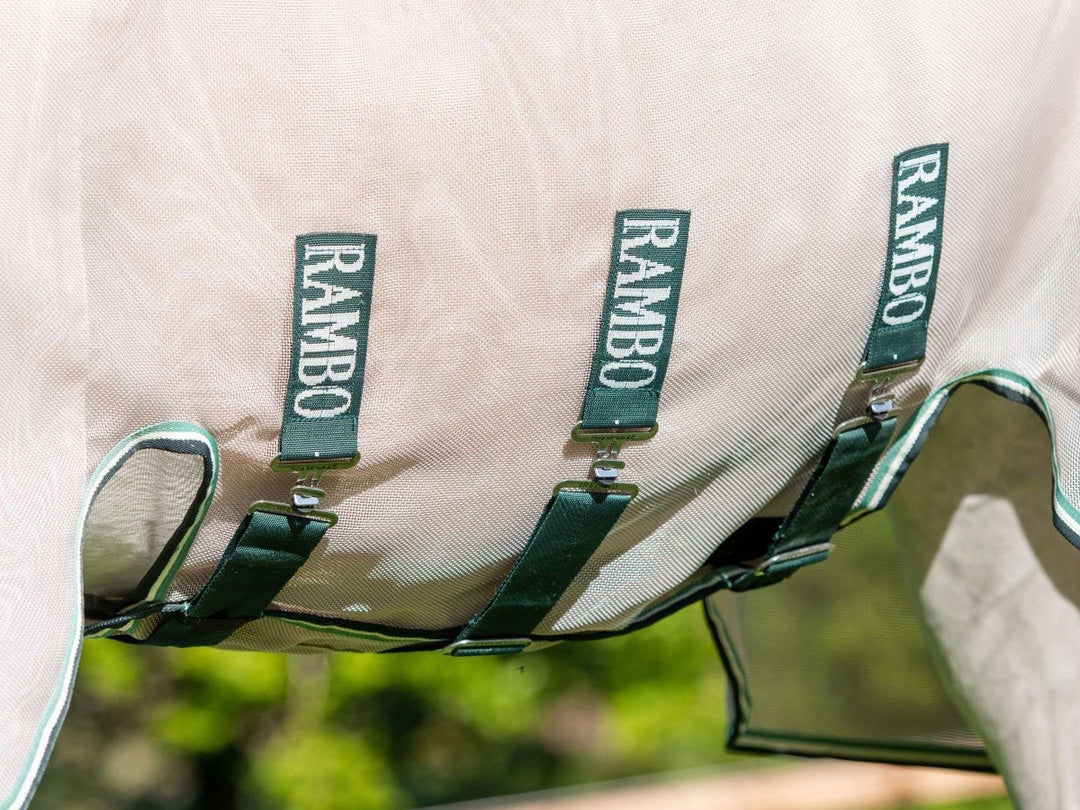
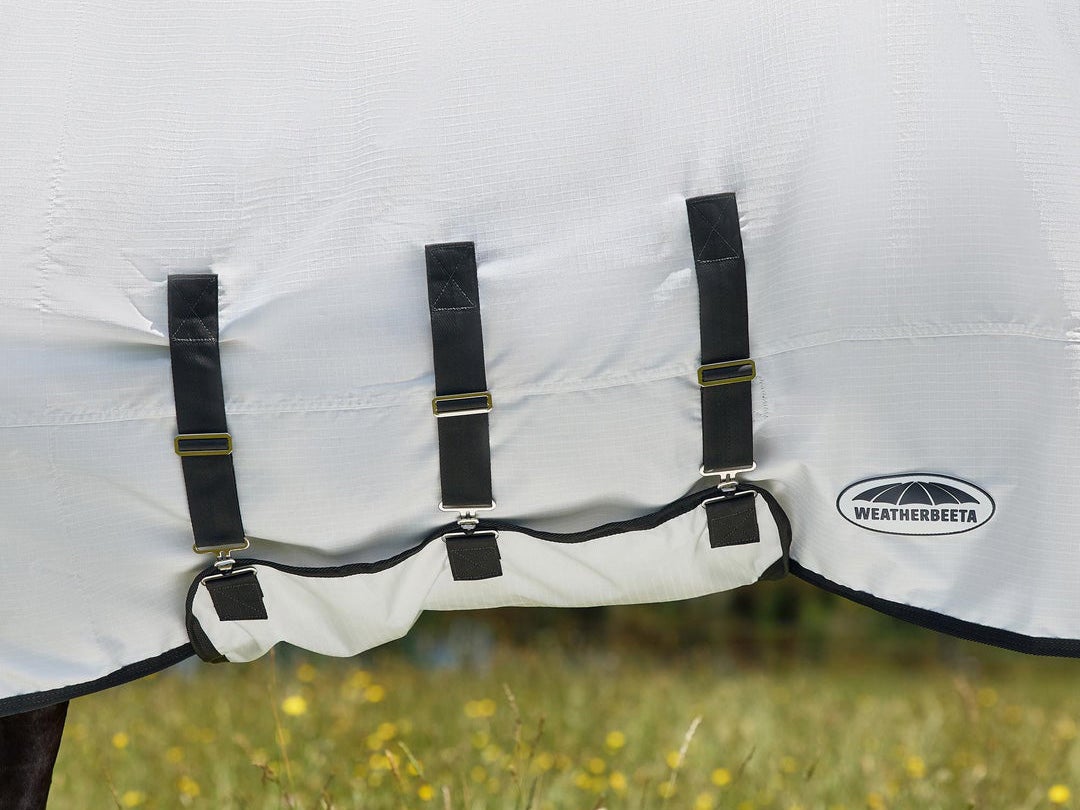
There are three common types of belly coverage found in fly sheets: standard, extended, and full belly coverage (belly bands).
Standard coverage typically ends at the bottom of the horse’s barrel, protecting only the sides. This option is best for horses that don’t experience irritation from insects on the underside of the belly.
Extended belly coverage adds extra length to each side of the sheet, offering increased protection to the lower barrel and portions of the belly. When secured with surcingles, it can cover much of the underside, though it doesn’t stay as fixed in place as a full belly band.
Full belly coverage (belly bands) features an additional panel that attaches to both sides of the sheet, providing secure, wraparound protection for the entire belly. This is an excellent choice for horses with skin sensitivities, such as sweet itch, or those needing maximum defense from biting insects.
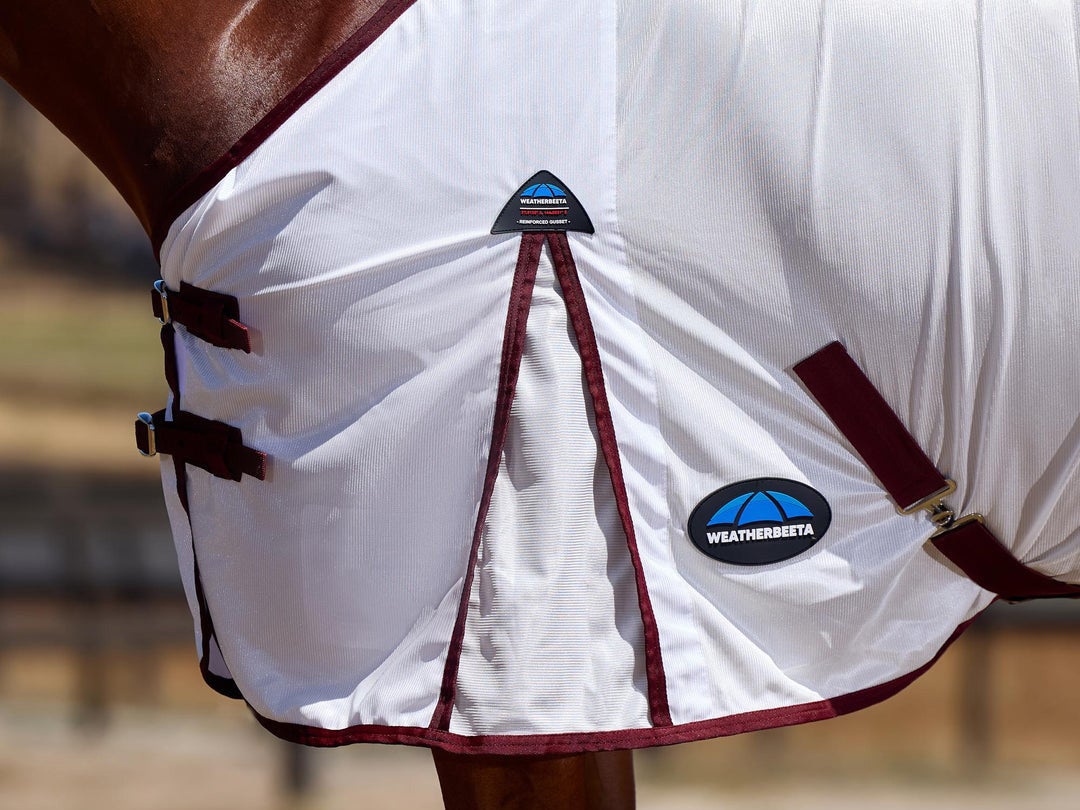
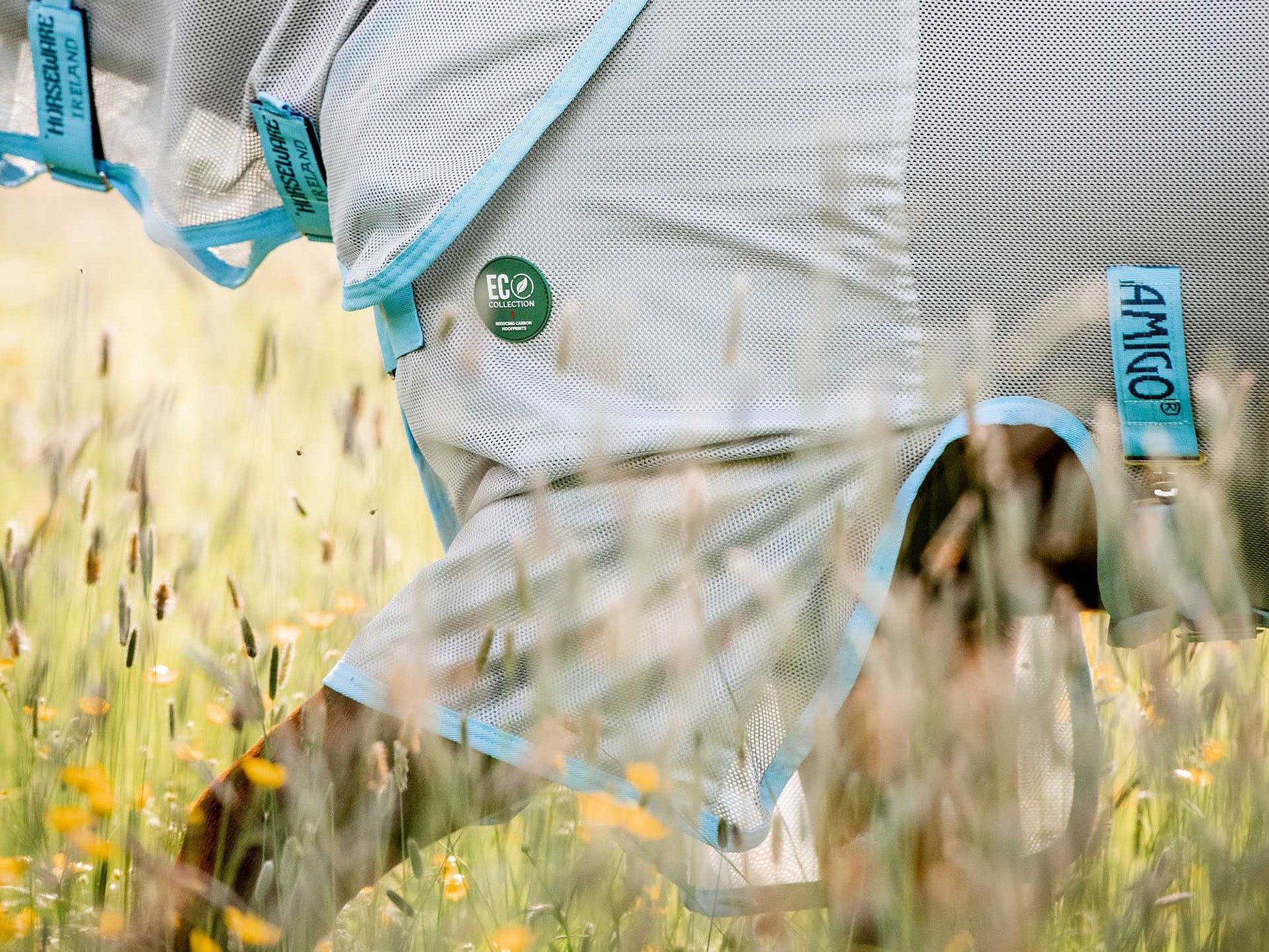
Shoulder gussets are commonly seen on blankets and fly sheets alike. Usually, there is a V-shape at the shoulder with pleated material. This point is intended to flex forward without having a surplus of material when not in use, allowing for complete freedom of movement.
Leg Arches offer advantages over traditional gussets because their seamless, ergonomic construction is designed to relieve tension along the neck and shoulder, and provide full freedom of movement for the front legs. The contoured cut behind the elbow prevents material from gathering behind the front leg, effectively eliminating unwanted rubbing or chafing during turnout. Leg Arches also help the blanket stay secure under the belly and offer additional coverage from the elements.
There are three primary types of fly sheet neck coverage: standard (no neck), detachable neck, and combo neck.
A standard neck sits just above the withers and wraps around the chest and shoulders, leaving the neck uncovered. Some styles include attachment points for adding a neck cover if desired. Standard neck fly sheets are a great option for horses that don’t need extra coverage or tend to overheat easily. As a bonus, they’re often the most affordable option.
Detachable necks are a popular favorite because they offer excellent flexibility. The neck cover can be removed or reattached as needed, allowing you to adjust coverage based on temperature, weather conditions, or bug pressure.
Combo necks feature a neck cover permanently attached to the sheet for seamless, full-coverage protection. This style is ideal for especially sensitive horses or those needing maximum defense from flies, helping minimize gaps where insects can sneak through.
Leg straps are the most common way to help secure a fly sheet in place. Typically crossed under the hindquarters and attached to the back of the sheet, they help prevent shifting or rotation during turnout. Fully adjustable and easy to replace if damaged, leg straps offer a secure and customizable fit.
Tail straps are another option and generally come in two styles: wipe-clean tail cords and webbed tail straps. Wipe-clean tail cords are PVC-covered, making them easy to maintain, and are designed to break under extreme pressure for added safety if a horse becomes caught. Webbed tail straps are also adjustable and allow for a more customized fit, though they may require more frequent cleaning.
Fly sheets can definitely be worth it; however, as with most topics in the equestrian world, it depends! Horses who live in extremely "buggy" areas can benefit from having most of their body protected from annoying flies. Some horse owners may choose to use fly sheets to offer UV protection to prevent sunburn (or coat fading). Meanwhile, others may be dealing with skin conditions, such as sweet itch, and need maximum protection from the elements and bugs. There are many horses who don't need a fly sheet and can get away with just wearing a fly mask during the summer months. When deciding if your horse needs a fly sheet or not, consider your location, your horse's specific needs, and how sensitive your horse is to bugs. For more information on fly sheets in general, check out our guide to fly gear for horses!
When deciding on which fly sheet is best for your horse, you should think about the amount of protection you are looking to provide them against insects or the sun. A more sensitive horse might need a full neck cover and belly band, while a less-sensitive horse can wear a standard fly sheet. You should also consider conformation, such as high withers or wide shoulders, and purchase a fly sheet accordingly that provides the best fit to keep your equine comfortable. If you have a horse that's particularly hard on their equipment, we suggest investing in one with durable materials so it can last at least one season. In short, tailor your fly sheet choice to meet your horse's specific needs!
To discover your horse's fly sheet size, simply measure them from the center of the chest, across the shoulder point, and to the point at the center of the tail. This will also roughly be their blanket size! You can read more about fly sheet and blanket sizing in our guide on how to measure for a horse blanket.
This depends on whether your horse is turned out with other equines, as well as how hard they are on their clothes. "Blanket wreckers" are known to be extremely tough on their fly sheets, while horses who live in a herd might have their clothes destroyed for them. There are two avenues equestrians may choose: 1) purchase cheaper, lower quality sheets since they will be destroyed anyway, or 2) invest in a more expensive sheet that is known for durability—and cross your fingers and hope it lasts. Horses who are not living with others and are kind to their clothes can often have a fly sheet last more than one season!
We hope this guide helped you find the perfect fly sheet for your horse! Knowing which features are the most important to you (and which aren't) can help to narrow down the options to make the buying process a bit easier. Be sure to check out our other fly gear guides to offer your horse total coverage during the warmer months. If you are in need of more assistance, you can always reach out to our helpful customer service via email at info@ridingwarehouse.com or via phone at 1-800-620-9145. Ride on!